
TL;DR — Quick Summary
What does an arborist do? ISA-certified arborists assess tree health, remove hazards, prune, and write city-required reports. Free estimate — (604) 721-7370.
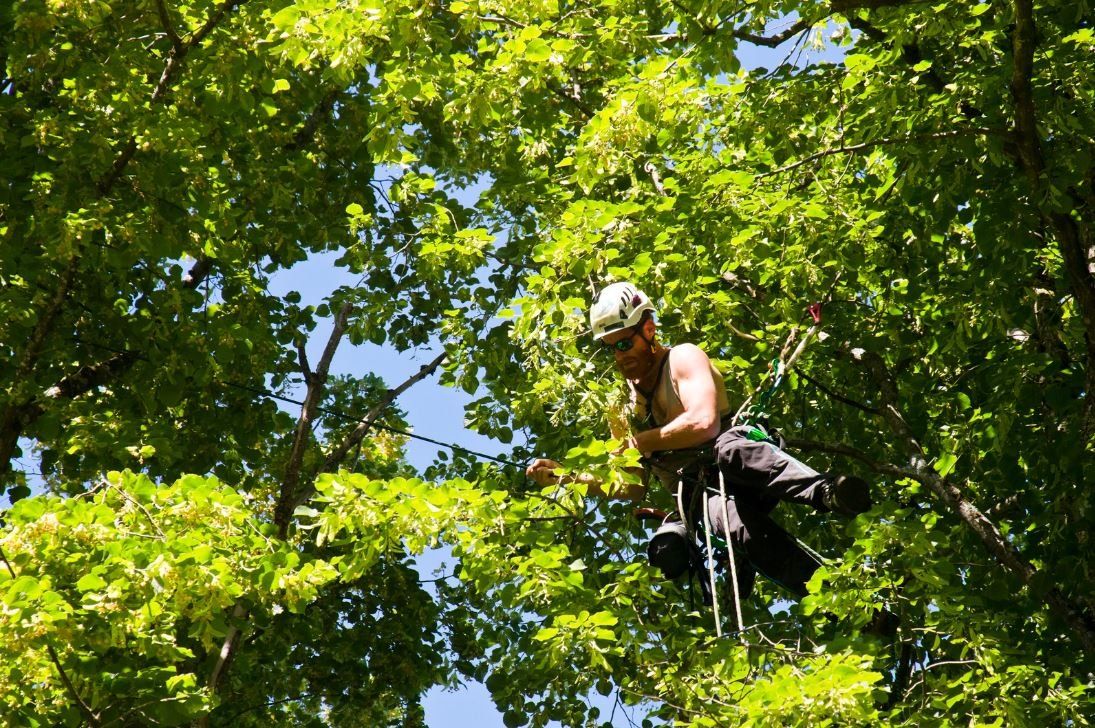
What does an arborist do? An arborist assesses tree health, identifies structural risk, performs skilled pruning, removes hazardous trees, and prepares documentation for permits, insurance, and municipal review.
For Vancouver homeowners, the short version is this: an arborist is not just someone with a chainsaw. Arborist work involves tree biology, safety standards, municipal bylaws, WorkSafeBC requirements, and judgment about whether a tree should be retained, treated, pruned, supported, or removed.
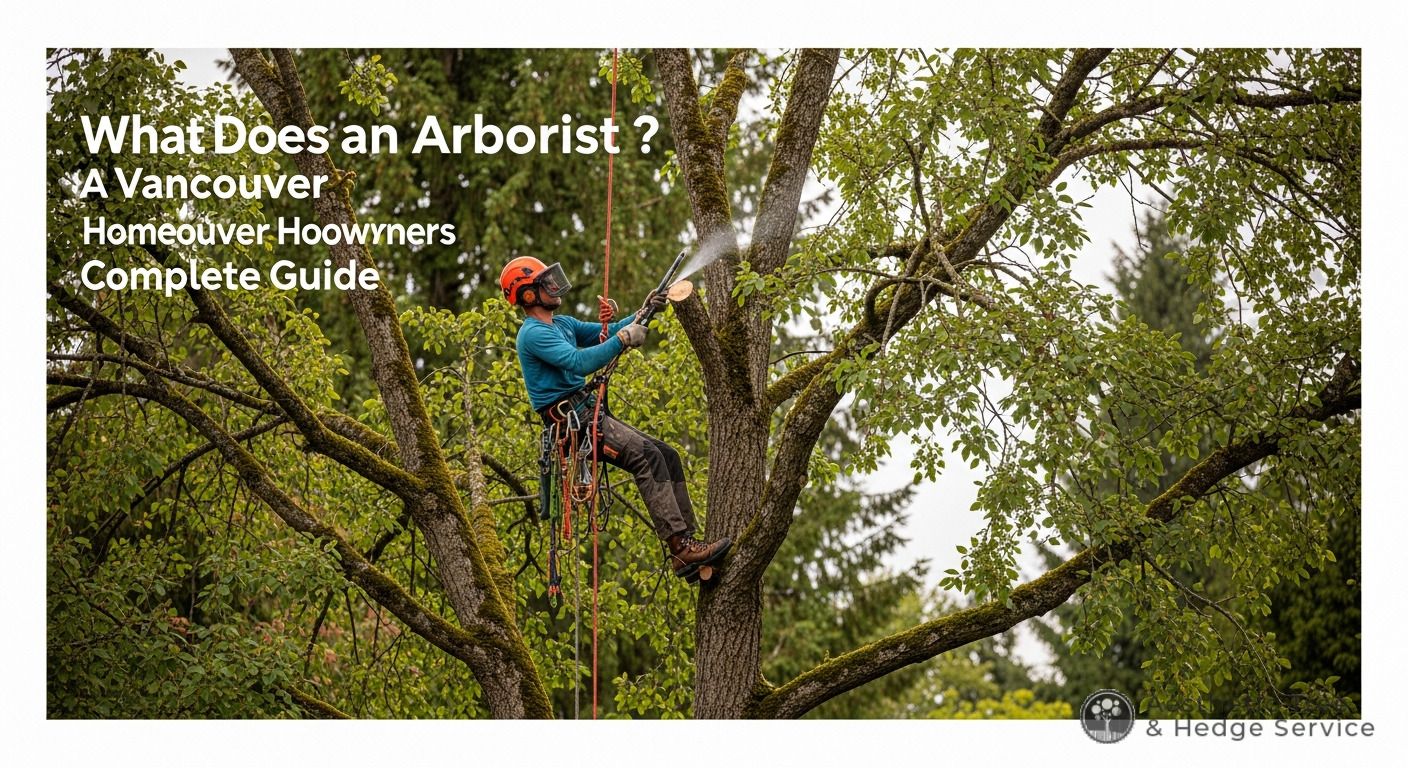
Here is what arborists actually do, when you need one, and what to ask before hiring a tree company in Vancouver or the Lower Mainland.
---
TL;DR
- **Arborists are tree-care specialists.** ISA Certified Arborists have documented experience, pass a formal exam, and must complete continuing education to stay certified.
- **Core arborist services** include hazard assessment, structural pruning, tree removal, stump grinding, cabling, bracing, hedge trimming, and arborist reports.
- **Vancouver's Protection of Trees By-law 9958** regulates removal of many private-property trees. Homeowners should confirm permit requirements before any cutting begins.
- **WorkSafeBC registration matters.** Tree work is hazardous, especially climbing, rigging, cutting near structures, and storm response.
- **ANSI A300 standards** are a recognized benchmark for professional tree care. A qualified arborist should understand proper pruning cuts, branch collars, crown reduction, and wound response.
---
What Is an Arborist?
An arborist is a professional who specializes in the care, maintenance, assessment, and removal of trees. Their work can include pruning, planting, diagnosis, risk assessment, soil care, cabling, bracing, removal, and written reporting.
The difference between an arborist and a general tree trimmer is judgment.
A tree trimmer may know how to cut branches. A qualified arborist determines whether a branch should be cut, where the cut should be made, how the cut affects the tree's structure, and whether pruning will solve the actual problem.
That distinction matters in Vancouver. A poor pruning cut can shorten a tree's life. A missed decay pocket can become a property hazard. An illegal removal can create permit problems and fines.
The best proof point is certification. The International Society of Arboriculture, commonly called ISA, offers the Certified Arborist credential. Certification requires professional tree-care experience, an exam, and continuing education. Homeowners can verify an ISA credential through the public lookup tool at treesaregood.org.
If a company says it has certified arborists, ask for the arborist's name and certification number. A legitimate company should be able to provide both.
Aesthetic Tree & Hedge Services works with ISA-certified arborists for Vancouver-area tree care, pruning, removal, and arborist reports.
---
What Services Does a Certified Arborist Provide?
Certified arborists handle the full lifecycle of tree care, from early diagnosis to emergency removal.
Tree Health Assessment
An arborist inspects the whole tree, not just the visible branches. That includes the root flare, trunk, bark, scaffold limbs, branch unions, canopy density, leaf colour, fungal growth, deadwood, cracks, lean, and nearby targets such as homes, fences, driveways, and sidewalks.
In the Lower Mainland, common concerns include Armillaria root rot, bacterial canker, black knot, construction damage, poor drainage, compacted soil, and storm-related limb failure.
A good assessment gives you more than a yes-or-no answer. It explains whether the tree can be retained, whether pruning is enough, whether monitoring is appropriate, or whether removal is the safer option.
Structural Pruning
Structural pruning is one of the most important things an arborist does. The goal is not to make a tree look smaller. The goal is to improve structure, reduce risk, remove dead or damaged limbs, correct weak unions, and preserve long-term health.
Professional pruning should respect the branch collar, avoid unnecessary topping, and avoid removing too much live canopy at once. Improper pruning can cause decay, stress response growth, sunscald, weakly attached shoots, and long-term instability.
ANSI A300 is one of the recognized standards used in professional arboriculture. Homeowners do not need to know every clause in the standard, but they should ask whether the company follows accepted pruning standards. A qualified arborist should understand the question immediately.
Tree Removal
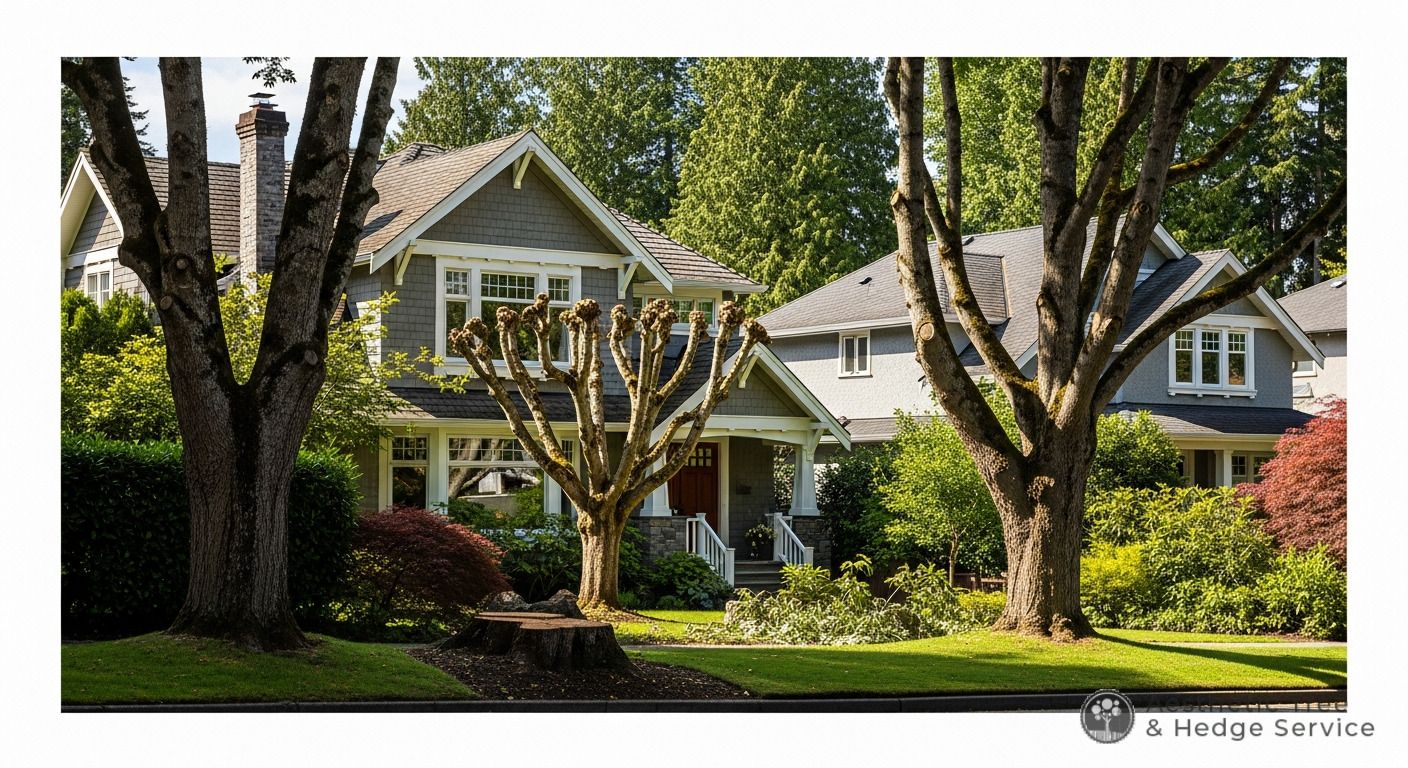
Tree removal is sometimes the right decision. A tree may need removal if it is dead, severely decayed, structurally unstable, storm-damaged, in conflict with construction, or creating a risk that cannot be reasonably reduced through pruning or support.
Tree removal in Vancouver can also be regulated. Depending on the tree size, location, species, condition, and municipality, a permit and arborist report may be required before work begins.
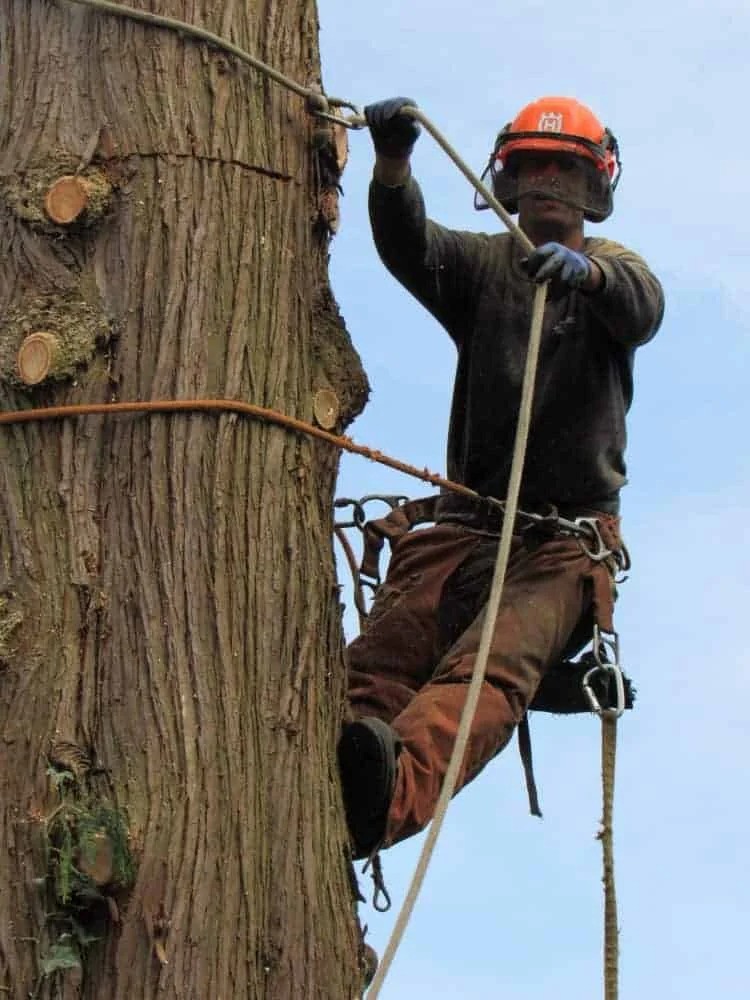
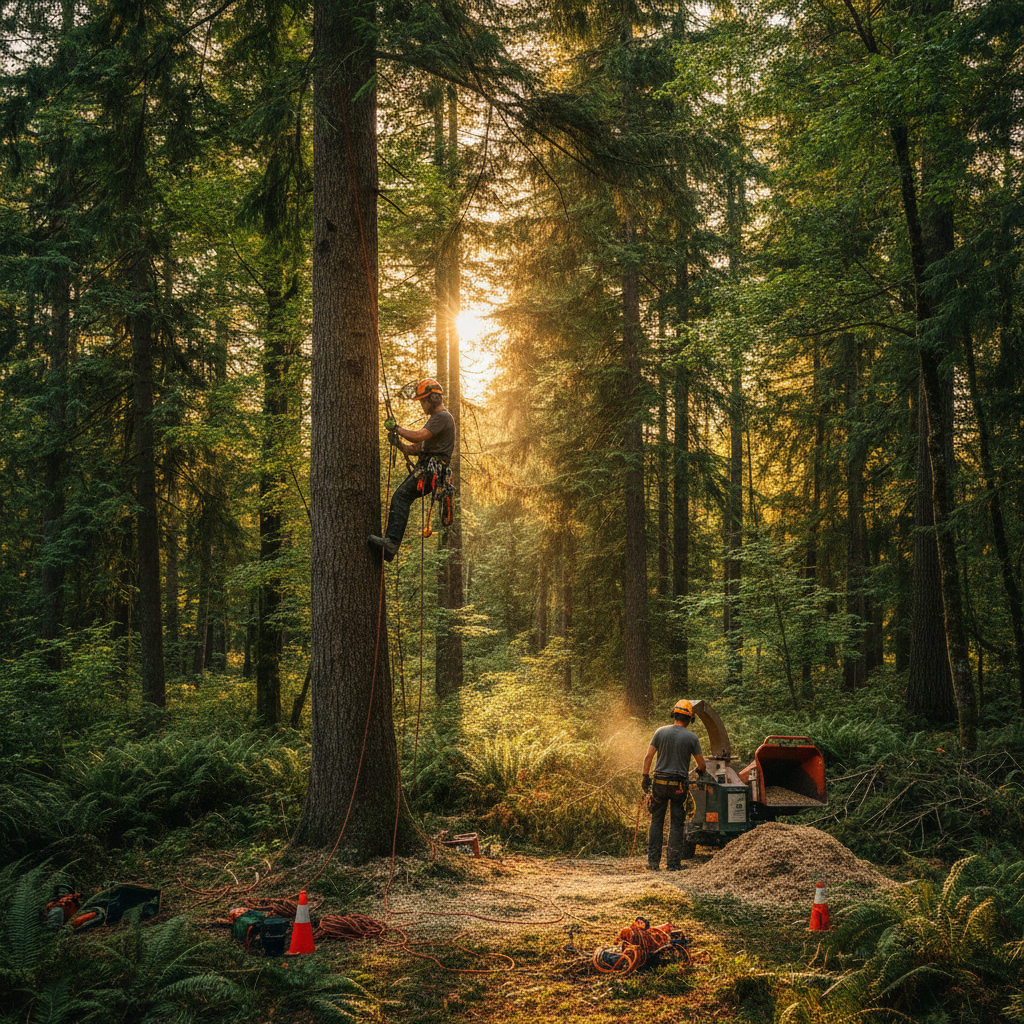
Urban removals often require climbing, rigging, lowering limbs in sections, protecting nearby structures, managing traffic or pedestrian access, and disposing of wood and debris safely. This is not work for an uninsured or unregistered crew.
Stump Grinding
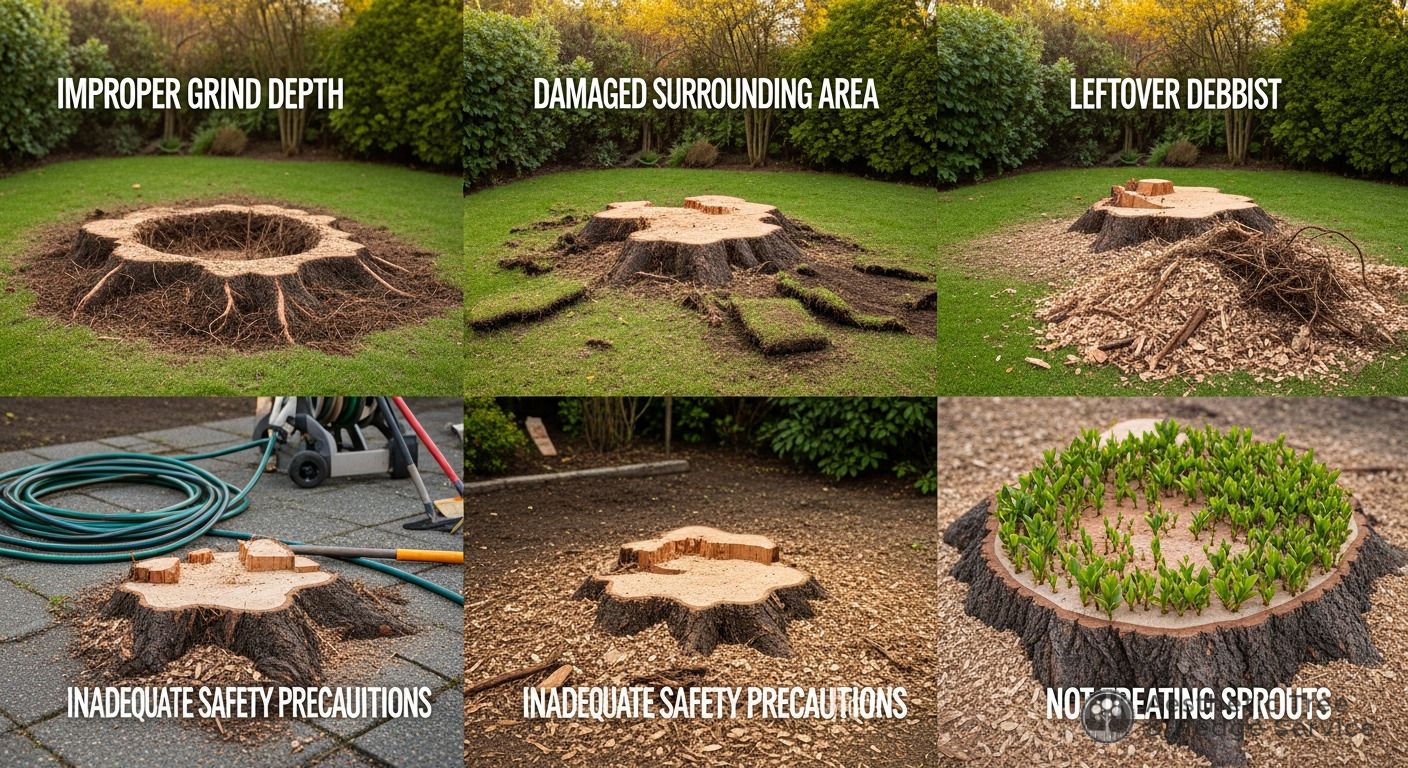
After a tree is removed, the stump remains. Stump grinding uses a specialized machine to grind the stump below grade so the area can be replanted, landscaped, or levelled.
Leaving a stump can create tripping hazards, attract pests, interfere with lawn or garden use, and allow some species to resprout. In some cases, decaying stumps can also contribute to fungal activity in the surrounding soil.
Cabling and Bracing
Not every structurally weak tree has to be removed. Some mature trees can be retained with cabling or bracing when the tree has value and the defect can be managed.
Cabling is often used for co-dominant stems, weak unions, or heavy limbs where load redistribution may reduce the chance of failure. It is not a cure for a tree already in advanced structural decline. A qualified arborist should explain whether support hardware is appropriate, what it can and cannot do, and how often the tree should be re-inspected.
Arborist Reports
An arborist report is a written assessment prepared by a qualified arborist. In Vancouver and nearby municipalities, reports are often needed for tree removal permits, development applications, construction near trees, insurance claims, and disputes involving hazardous trees.
A report usually includes tree species, diameter, condition, structure, defects, risk rating, site context, photos, recommendations, and the arborist's credentials. Municipal requirements vary, so the report should be prepared for the specific city or district reviewing it.
Emergency Tree Service
Storms can split trunks, tear out limbs, uproot trees, and leave branches hanging over homes, driveways, and power lines. Emergency tree service focuses on making the site safe and removing immediate hazards.
In an emergency, the priority is safety. Homeowners should stay away from suspended limbs, leaning trees, and anything touching utility lines. A qualified crew can assess the hazard, secure the area, and remove damaged material using the right equipment.
Hedge Trimming
Many arborists also maintain formal hedges. In Vancouver, cedar, laurel, boxwood, yew, and mixed privacy hedges are common. Proper hedge trimming depends on timing, species, previous cut history, and how much live growth remains.
Cutting too hard into old wood can leave permanent gaps on some species. Cutting at the wrong time can stress plants or expose tender growth. A professional hedge trim should preserve density, shape, and plant health.
---
When Do You Need a Certified Arborist?
You should call a certified arborist when the decision carries safety, legal, or long-term tree-health consequences.
**1. Before removing a regulated tree.** Vancouver's Protection of Trees By-law 9958 regulates many private-property trees. The exact permit requirement depends on the tree and property context, so homeowners should confirm with the City of Vancouver or have an arborist check before removal.
**2. When a tree is close to a home or structure.** Trees near roofs, fences, retaining walls, garages, driveways, and utility lines require careful assessment. The arborist looks at lean, root condition, crown weight, decay, targets, and likely failure direction.
**3. When you see signs of disease or decline.** Warning signs include crown dieback, fungal growth, peeling bark, cracks, sudden leaf yellowing, dead limbs, oozing wounds, black knot on Prunus species, and root flare decay. Early diagnosis can sometimes save a tree or reduce the cost of intervention.
**4. When you need documentation.** Permit applications, development planning, insurance files, and neighbour disputes often require a written arborist report. A verbal opinion is not enough when a municipality, insurer, or contractor needs formal documentation.
**5. After a major storm.** A tree can look stable from the ground while still having split unions, torn roots, hanging limbs, or hidden cracks. Post-storm inspections are especially important when the tree is near a target.
---
How Does an Arborist Assess Tree Risk?
Tree risk assessment is based on three practical questions: what could fail, how likely is it to fail, and what would it hit?
Target Assessment
The arborist first looks at what is below or near the tree. A driveway, home, sidewalk, parked car, deck, play area, or neighbouring property changes the risk profile.
A dead tree in an unused back corner is different from the same tree leaning over a roof. Risk depends on both tree condition and target exposure.
Likelihood of Failure
The arborist checks for defects such as cavities, cracks, decay, dead limbs, included bark, weak unions, root plate movement, fungal fruiting bodies, and poor taper.
Most assessments start with visual inspection. If decay is suspected, the arborist may recommend further testing or monitoring. Advanced tools such as resistance drilling or sonic tomography may be used in higher-value or higher-risk cases, though they are not necessary for every residential tree.
Likelihood of Impact
A failing branch or trunk section only creates serious risk if it is likely to hit something. The arborist considers lean direction, wind exposure, crown weight, slope, targets, and the likely path of failure.
The recommendation may be pruning, cabling, monitoring, soil correction, target management, or removal.
---
Why ISA Certification Matters
In BC, a person can advertise tree services without holding an ISA credential. That is why homeowners need to ask specific questions before hiring.
ISA certification matters because it gives consumers a way to verify that the arborist has met an independent professional benchmark. Certified Arborists must demonstrate experience, pass an exam, and maintain the credential through continuing education.
That does not mean every certified arborist is equally skilled, and it does not mean every uncertified worker is careless. But for homeowners, municipalities, and insurers, ISA certification is the clearest widely recognized credential in arboriculture.
Before hiring, ask for the certification number and verify it through ISA's public lookup tool.
---
What Does a Vancouver Arborist Report Include?
A Vancouver-area arborist report usually includes:
**Tree inventory.** Species, diameter at breast height, height estimate, crown spread, location, and identifying number.
**Condition assessment.** Notes on health, structure, defects, pests, disease, decay, deadwood, root issues, and site constraints.
**Risk assessment.** A practical evaluation of likely failure parts, nearby targets, and recommended risk mitigation.
**Photos and site context.** Images showing the tree, defects, surrounding structures, access constraints, and relevant site conditions.
**Recommendations.** Retain, prune, cable, monitor, remove, replace, or protect during construction.
**Tree protection information.** For construction or development work, the report may identify tree protection zones, fencing, root protection measures, and work limits around retained trees.
**Credentials.** The arborist's name, certification number, date, and signature.
Municipal requirements vary across Vancouver, Burnaby, Richmond, North Vancouver, Coquitlam, and other Lower Mainland cities. A report should be prepared for the specific municipality reviewing it.
---
Vancouver-Area Bylaws and Safety Rules
Tree bylaws are local. Vancouver, Burnaby, Richmond, North Vancouver, Coquitlam, Surrey, and other municipalities each set their own permit thresholds, replacement requirements, and application rules.
In the City of Vancouver, the Protection of Trees By-law 9958 regulates removal of many private-property trees. The City may require a permit, arborist report, replacement planting, and site documentation depending on the tree and property.
Other municipalities use similar concepts but different forms, thresholds, and review processes. Before cutting, confirm the rules with the municipality or have an arborist do it for you.
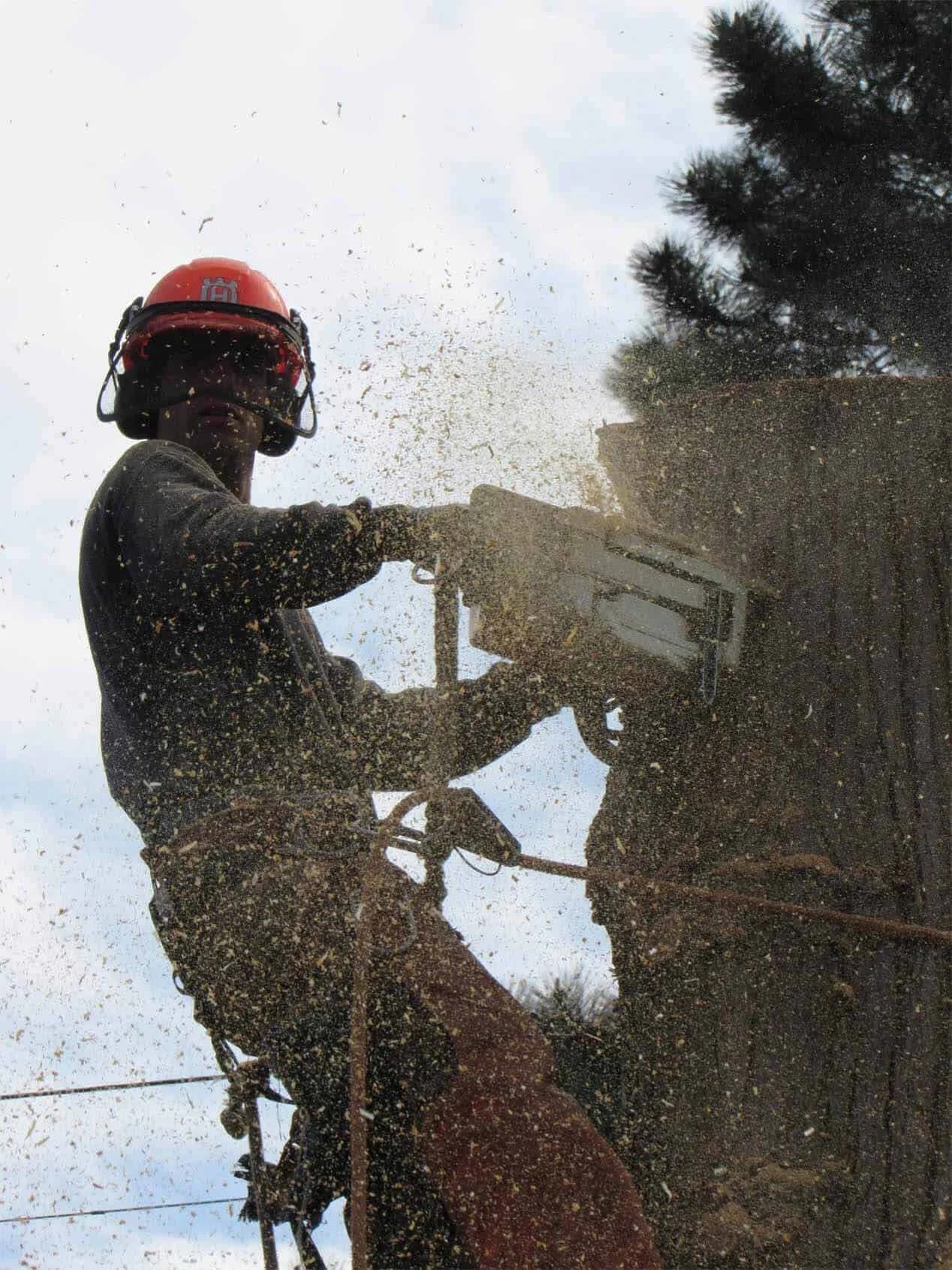
WorkSafeBC is separate from municipal bylaws. Tree work can involve climbing, rigging, chainsaws, chippers, aerial lifts, traffic exposure, and heavy wood under tension. Homeowners should hire companies that are properly registered, insured, and trained for the work being performed.
Before work begins, ask for:
- ISA Certified Arborist name and number
- WorkSafeBC registration confirmation
- Liability insurance certificate
- Written scope of work
- Permit guidance if the tree may be regulated
---
Vancouver Trees That Often Need Arborist Attention
The Lower Mainland has a wet climate, dense urban lots, older neighbourhood trees, and frequent conflicts between mature roots and hardscape. Some species come up often in arborist calls.
Douglas Fir
Douglas firs are large, valuable native trees, but they need space. In urban settings, they can be affected by root disturbance, grade changes, soil compaction, drought stress, and fungal disease. Because they can become very large, structural defects deserve careful assessment.
Bigleaf Maple
Bigleaf maples grow quickly and often develop heavy limbs or co-dominant stems. Weak unions, included bark, and large lateral limbs can create storm risk. Structural pruning and cabling may help when defects are caught early.
Western Red Cedar
Western red cedars are common in Vancouver hedges and landscapes. They can suffer from drought stress, root disturbance, poor drainage, and over-pruning. Mature cedars near driveways, foundations, and fences should be assessed before major cutting or construction.
Ornamental Cherry and Plum
Prunus species are common throughout Vancouver neighbourhoods. They can be affected by bacterial canker, cytospora canker, and black knot. Early pruning of infected wood can help slow spread, but timing and sanitation matter.
---
Questions to Ask Before Hiring an Arborist
Ask these before you approve the work:
**1. Are you ISA-certified, and what is your certification number?** Verify the credential before hiring.
**2. Are you registered with WorkSafeBC?** Tree work is high-risk. Do not skip this.
**3. Do you carry liability insurance?** Ask for proof, especially if work is near structures, vehicles, fences, or neighbouring property.
**4. Do you follow accepted pruning standards such as ANSI A300?** A qualified arborist should be able to explain proper pruning cuts and why topping is harmful.
**5. Do I need a permit before this work begins?** If the answer is uncertain, pause and confirm with the municipality.
**6. Will I receive a written scope or arborist report?** For regulated removals, construction planning, or insurance matters, written documentation matters.
**7. Have you handled similar trees in my area?** Local experience helps. A cedar hedge in Burnaby, a cherry in Vancouver, and a Douglas fir in North Vancouver can involve different risks and expectations.
---
FAQ
What is the difference between an arborist and a tree surgeon?
In Canada, the terms are often used interchangeably. Arborist is the professional term used by ISA, municipalities, and most tree-care companies. Tree surgeon is an older informal term.
Do I need a permit to prune a tree in Vancouver?
Routine pruning usually does not require the same process as removal, but there are exceptions for protected trees, notable trees, development sites, and excessive cutting. If the pruning is heavy or the tree may be regulated, check with the City of Vancouver or ask an arborist before work begins.
How long does a tree removal permit take in Vancouver?
Timing varies by municipality, application volume, completeness of the arborist report, and whether replacement planting or additional review is required. A straightforward arborist visit and report may take several business days. Municipal review can take longer, so plan ahead.
Can an arborist save a diseased tree?
Sometimes. It depends on the species, disease, severity, site conditions, and how early the problem is caught. Some fungal and bacterial issues can be managed through pruning, sanitation, drainage improvement, soil care, and monitoring. Advanced decay or structural failure may not be reversible.
Is arborist work covered by home insurance?
Emergency removal after storm damage may be covered in some circumstances, especially if a tree damages an insured structure. Preventive removal and routine pruning are usually treated differently. Always confirm with your insurer before work begins. An arborist report can help document the condition of the tree and the reason for the work.
---
Ready to Book a Certified Arborist in Vancouver?
Aesthetic Tree & Hedge Services provides arborist services across Vancouver, Burnaby, North Vancouver, Richmond, Coquitlam, and the Lower Mainland.
Services include tree health assessments, pruning, tree removal, stump grinding, hedge trimming, cabling, emergency response, and arborist reports for municipal or insurance use.
Before any major tree work, get the right assessment, confirm permit requirements, and make sure the crew is qualified, insured, and properly registered.
Call Aesthetic Tree & Hedge Services: (604) 721-7370.
Before You Go
Where are you in your tree care journey?
Our Tree Care Services
ISA-certified arborists serving Greater Vancouver
Explore Our Tree Care Services
From expert pruning to safe tree removal, our ISA-certified arborists are ready to help across Greater Vancouver.
View Services