
ISA-Certified Arborists · Greater Vancouver
Tree Service
New Westminster
ISA-Certified Arborists · Metro Vancouver
Aesthetic Tree & Hedge Services provides professional tree removal, pruning, stump grinding, hedge trimming, and arborist reports throughout New Westminster, BC. From the heritage canopy of Queens Park to the riparian corridors along the Fraser River in Queensborough, our ISA-certified arborists understand the mature urban forest, steep terrain, heritage tree protections, and municipal bylaws that define tree care in the oldest city in British Columbia. With 20+ years of experience, 100+ five-star Google reviews, and the specialized equipment needed for tight heritage-neighbourhood lots and hillside properties, we are one of the most trusted tree service companies serving New Westminster. Call (604) 721-7370 for a free, no-obligation estimate.
What Tree Species Are Most Common in New Westminster?
New Westminster's position along the north bank of the Fraser River, combined with its age as a city (incorporated in 1860), means the urban forest includes both substantial native species and historic ornamental plantings that are among the oldest in the Lower Mainland. The trees our arborists encounter most frequently in New Westminster include:
- Western Red Cedar (Thuja plicata) — The dominant native conifer across New Westminster, Western Red Cedars are found on residential lots throughout Queens Park, Glenbrooke North, and Victory Heights. Mature specimens regularly exceed 25 metres in height, and some of the oldest cedars in Queens Park predate the city's incorporation.
- Douglas Fir (Pseudotsuga menziesii) — Large Douglas Firs are common on hillside properties in Sapperton, the Brow of the Hill, and along the bluffs overlooking the Fraser River. Their height and shallow lateral root systems create windthrow risk on the exposed, steep terrain that characterizes much of New Westminster's topography.
- Bigleaf Maple (Acer macrophyllum) — The largest native maple in North America, Bigleaf Maples are widespread across New Westminster's older neighbourhoods. Queens Park in particular contains significant Bigleaf Maple specimens with spreading canopies that produce heavy leaf litter each autumn and frequently develop large deadwood branches that require regular maintenance.
- Black Cottonwood (Populus trichocarpa) — Found along the Fraser River corridor and throughout Queensborough's low-lying areas, Black Cottonwoods are fast-growing riparian trees that can reach 30+ metres. They produce large volumes of cotton-like seed dispersal in late spring and have aggressive root systems that frequently conflict with foundations, sewer lines, and sidewalks.
- Horse Chestnut (Aesculus hippocastanum) — Planted as street trees in New Westminster's historic neighbourhoods during the early 1900s, Horse Chestnuts line several of the older streets in Uptown, Queens Park, and Glenbrooke North. These mature ornamental trees require careful pruning to manage canopy weight and deadwood.
- Japanese Maple (Acer palmatum) — Common in residential gardens throughout New Westminster, Japanese Maples are planted extensively as ornamental specimens. While smaller than the native species, they are highly valued by homeowners and often require delicate pruning to maintain their natural form.
Queens Park contains some of the oldest and largest trees in the Lower Mainland, including heritage specimens that were growing when New Westminster served as the capital of the Colony of British Columbia. The combination of these mature native species with historic ornamental plantings creates a diverse and complex urban canopy that requires specialized arboricultural knowledge.
How Does the New Westminster Tree Bylaw Work?
New Westminster's Tree Protection and Regulation Bylaw governs the removal and protection of trees on private property throughout the city. The bylaw reflects the city's commitment to preserving its mature urban forest, particularly in heritage neighbourhoods where large trees are considered integral to neighbourhood character.
Key Provisions of the Tree Protection Bylaw
Under New Westminster's tree protection regulations, a permit is required before removing any protected tree with a trunk diameter of 30 cm or more measured at 1.4 metres above the base (diameter at breast height, or DBH). This threshold applies to trees on private property across the city.
What the permit application requires:
- A completed tree removal application submitted to the City of New Westminster
- A site plan showing the location of the tree relative to buildings, property lines, and neighbouring structures
- An arborist report from an ISA-certified or registered consulting arborist documenting the tree's species, size, health, structural condition, and the rationale for removal
- A tree replacement plan or payment of the required replacement fee
Replacement requirements are a significant component of New Westminster's bylaw. When a protected tree is removed, the property owner is typically required to plant replacement trees on the property or pay into the city's tree replacement fund. The replacement ratio depends on the size and species of the tree being removed, with larger and more significant trees requiring proportionally greater replacement planting.
Heritage Tree Protections
Trees in the Queens Park neighbourhood and other heritage areas may be subject to additional protections under the city's heritage conservation framework. Heritage trees — those identified as having historical, cultural, or ecological significance — can carry more stringent removal requirements, including higher replacement ratios, additional review periods, and in some cases, denial of removal permits if the tree is deemed healthy and structurally sound.
Property owners in Queens Park and adjacent heritage areas should be aware that the permitting process for tree removal may take longer and face more scrutiny than in other parts of the city.
Development-Related Tree Protection
For properties undergoing development, redevelopment, or significant renovation, the city requires a tree management plan as part of the development permit process. This plan must be prepared by a certified arborist and must document all trees on the property, assess their condition, and propose retention, protection, or replacement measures for each tree affected by the proposed construction.
Aesthetic Tree handles the entire permit process for New Westminster property owners, from the initial arborist assessment through to the permit application submission and replacement tree planning. Our arborist reports are accepted by the City of New Westminster for all permit categories.
What Makes Tree Care in New Westminster Unique?
New Westminster presents a distinct set of challenges that differ from other Metro Vancouver municipalities. As the oldest incorporated city in British Columbia, its urban landscape has evolved over more than 160 years, creating conditions that require experienced arborists with specialized knowledge.
Heritage neighbourhood character and mature trees. New Westminster's oldest neighbourhoods — Queens Park, Glenbrooke North, Uptown, and the Brow of the Hill — contain homes dating from the late 1800s through the early 1900s, surrounded by trees that are often 80 to 150+ years old. These mature trees have extensive root systems that have grown around and through aging infrastructure, including foundations, retaining walls, sewer laterals, and sidewalks. Removing or pruning these trees requires careful assessment of root-infrastructure conflicts to avoid collateral damage.
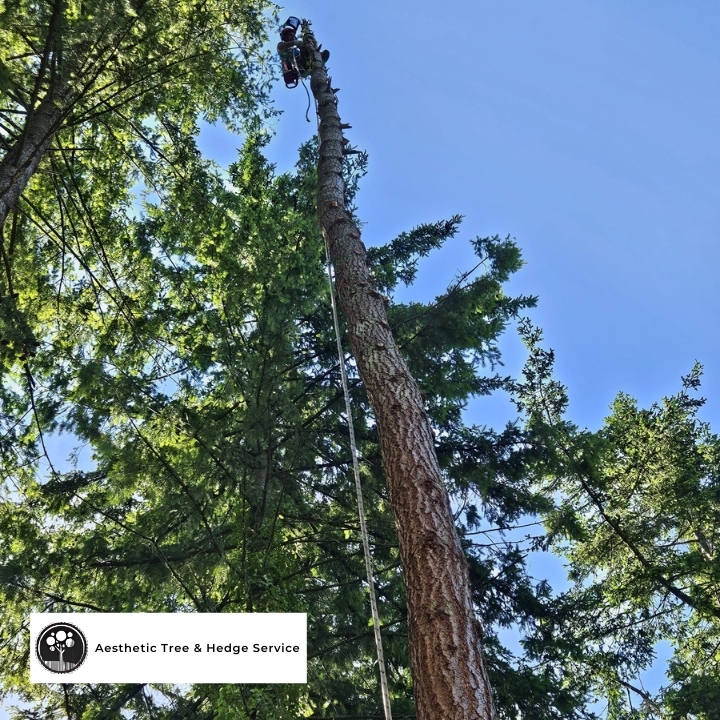
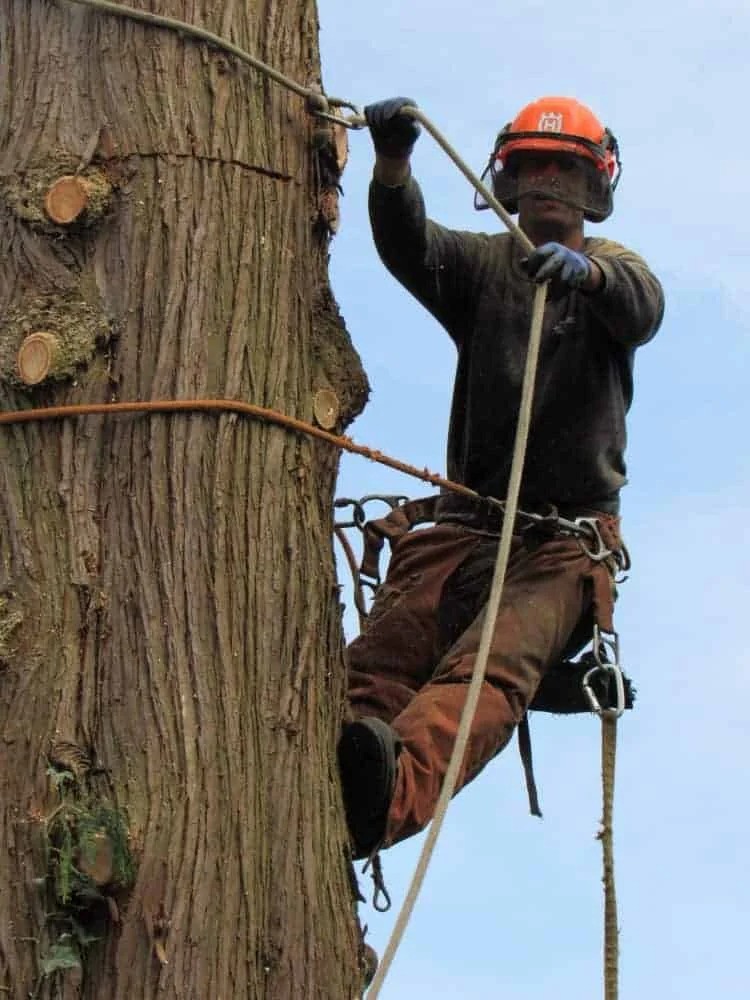
Steep terrain and bluff conditions. Much of New Westminster is built on hillside terrain, with dramatic elevation changes from the waterfront along the Fraser River up to the residential plateaus of Queens Park and Uptown. Sapperton sits on a steep bluff overlooking the Brunette River and the Fraser, while the Brow of the Hill descends sharply toward the river. These grades — often 20% to 40% — limit equipment access and require sectional tree removal with rigging rather than straightforward felling. Our arborists climb and dismantle trees piece by piece, lowering sections on ropes to controlled drop zones on properties where crane or bucket truck setup is not possible.
Fraser River riparian areas. Queensborough, located on Lulu Island in the Fraser River, and the waterfront areas along the mainland portion of New Westminster sit within or adjacent to riparian zones. Trees growing near the riverbank or within designated environmentally sensitive areas may be subject to additional protections under both municipal and provincial regulations. Work in these areas may require consultation with a Qualified Environmental Professional (QEP) in addition to the standard arborist assessment.
Conflict between heritage preservation and new development. New Westminster is experiencing significant densification, particularly in the Downtown and Sapperton areas, where high-rise and mid-rise residential development is replacing older low-rise buildings. This creates tension between preserving the existing urban canopy and accommodating new construction. Tree management plans for development sites in New Westminster must carefully balance retention of significant trees with the practical requirements of the building footprint, and our arborists prepare these plans regularly for developers and homeowners undertaking renovations or additions.
Root-infrastructure conflicts in aging neighbourhoods. The combination of century-old infrastructure and mature tree root systems creates persistent conflicts throughout New Westminster's older areas. Roots from large cedars, maples, and cottonwoods penetrate aging clay sewer pipes, lift sidewalks, crack retaining walls, and compromise foundations. Addressing these issues requires arborists who understand root architecture and can provide solutions — including root pruning, root barriers, and selective removal — that resolve the infrastructure problem without unnecessarily destroying healthy trees.
Which New Westminster Neighbourhoods Do We Serve?
Aesthetic Tree & Hedge Services works in every neighbourhood across New Westminster, including:
- Downtown — The urban core along Columbia Street and the waterfront, with street trees, plaza plantings, and mixed-use development sites requiring tree management plans for construction projects.
- Uptown — Established residential area centred along Sixth Street and Sixth Avenue, with mature street trees, older homes on smaller lots, and frequent hedge trimming and pruning requests.
- Sapperton — One of New Westminster's oldest neighbourhoods, built on steep terrain above the Brunette River. Sapperton properties often feature large Douglas Firs and cedars on challenging slopes with limited equipment access.
- Queens Park — The premier heritage residential neighbourhood in New Westminster, home to some of the largest and oldest trees in the Lower Mainland. Tree work in Queens Park frequently involves heritage tree considerations and heightened permit requirements.
- Glenbrooke North — A quiet residential area with large lots and significant tree coverage, including mature cedars, maples, and ornamental species. One of our most active service areas for pruning and hedge maintenance.
- Glenbrooke South — Similar character to Glenbrooke North, with mature trees on established residential properties and regular demand for canopy management and stump grinding.
- Queensborough — Located on Lulu Island in the Fraser River, Queensborough has a mix of older single-family homes and newer townhouse developments. Black Cottonwoods and riparian species are common, and the low-lying terrain creates unique drainage and root-system considerations.
- Connaught Heights — A small, elevated neighbourhood with panoramic views and mature tree cover. Properties here often require view pruning and canopy management to maintain sightlines.
- West End — A residential area in the western portion of the city with a mix of older homes and newer infill development. Mature hedges and ornamental trees are common service requests.
- Brow of the Hill — Named for its steep terrain descending toward the Fraser River, this neighbourhood features older homes with large trees on challenging grades. Sectional removal and rigging are frequently required.
- Victory Heights — A residential neighbourhood in the southeast portion of the city, bordering Burnaby. Mature conifers and hedges are the primary service requests in this area.
- McBride-Sapperton — The area along McBride Boulevard connecting Sapperton to the rest of the city, with a mix of residential and institutional properties. Street trees and boulevard plantings are common, along with larger specimens on residential lots.
No matter which New Westminster neighbourhood you are in, we provide free on-site estimates within 48 hours.
What Services Does Aesthetic Tree Provide in New Westminster?
Aesthetic Tree & Hedge Services offers a complete range of professional tree care and hedge maintenance services throughout New Westminster:
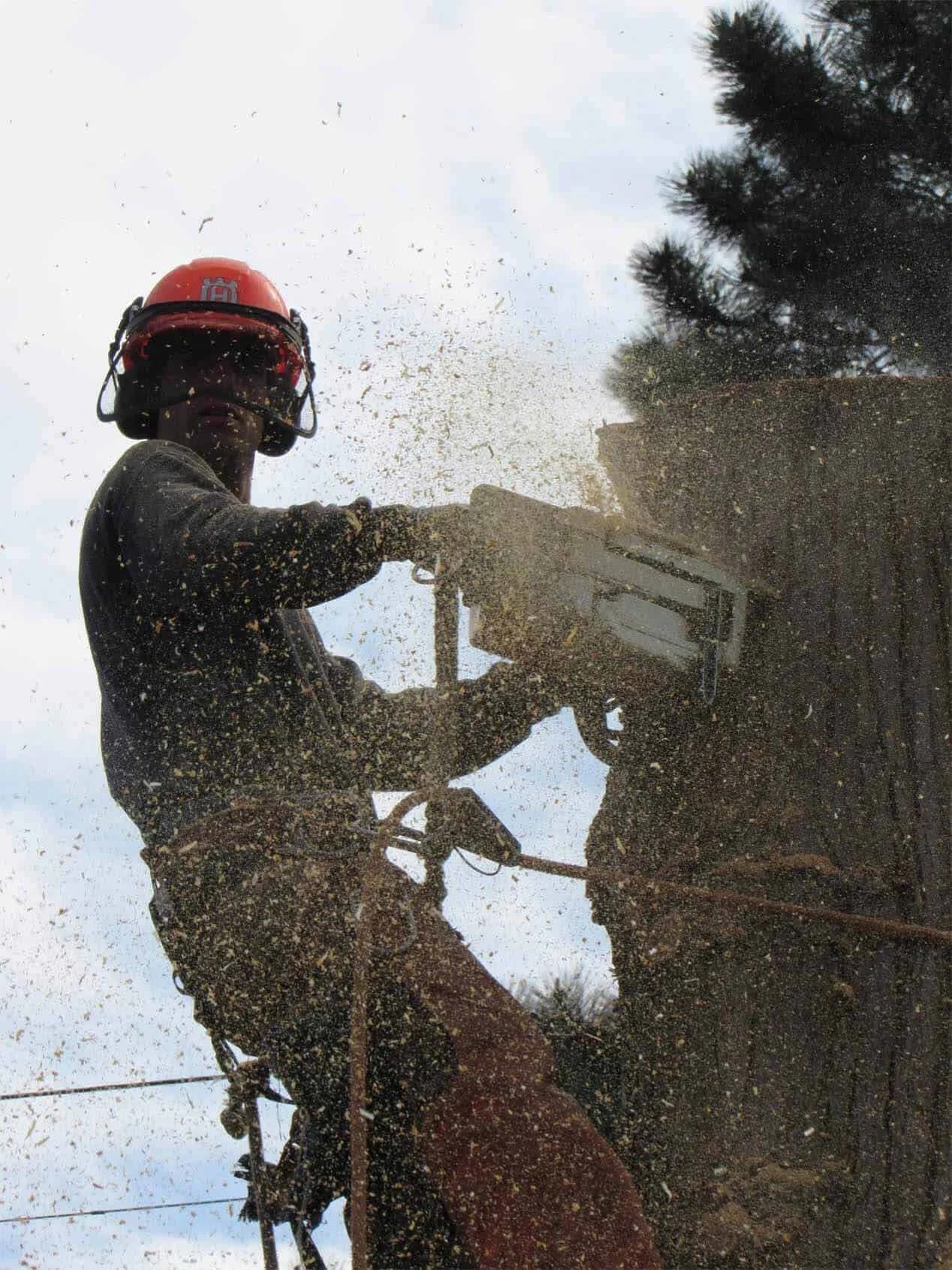
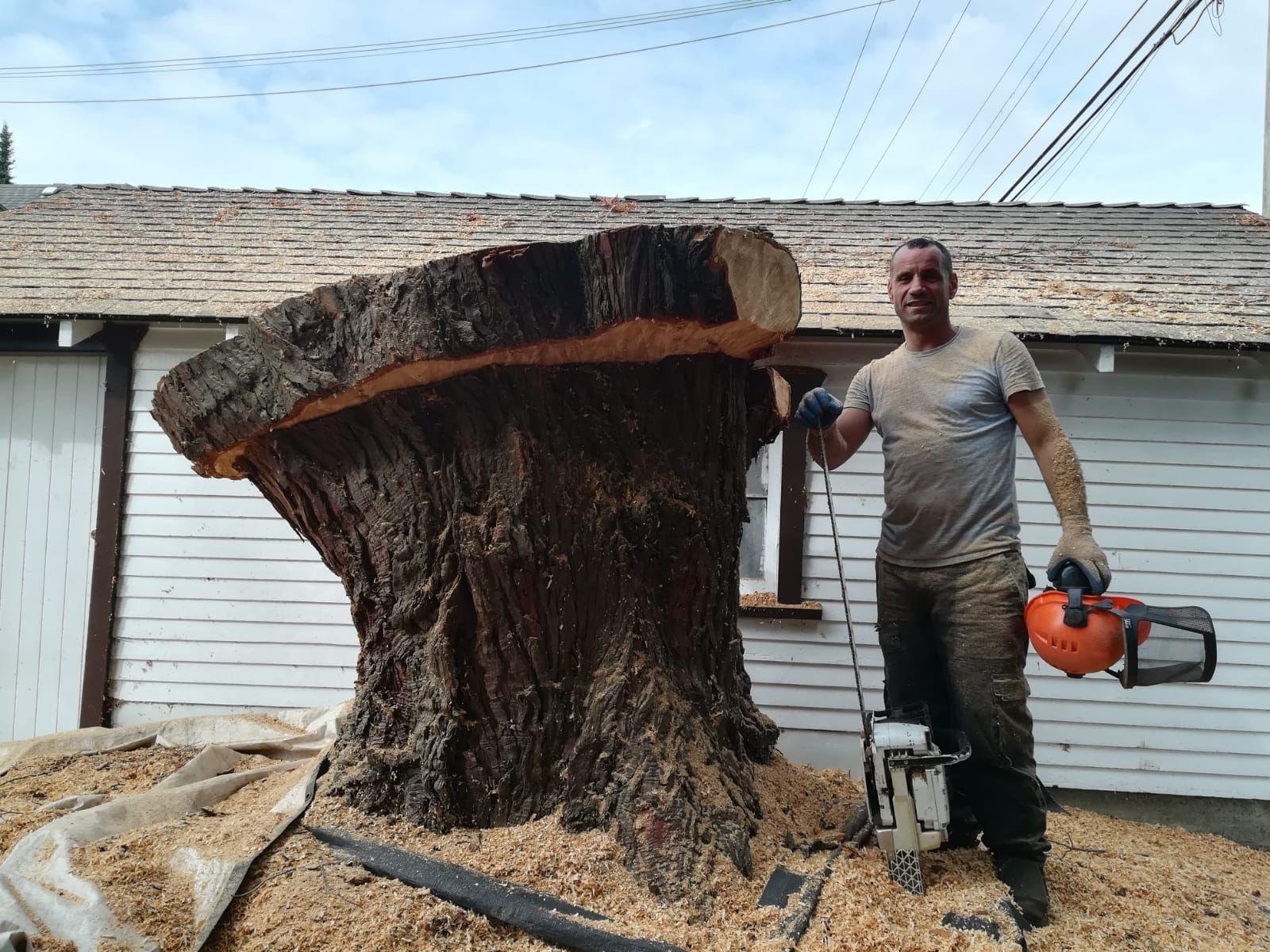
Tree Removal. Safe, controlled removal of trees of any size, from small ornamental specimens to large Douglas Firs and Western Red Cedars exceeding 30 metres. Our team uses sectional dismantling with rigging on properties where steep terrain, proximity to structures, or limited access prevents conventional felling. All removals include branch chipping, debris cleanup, and log removal.
Tree Pruning and Maintenance. ISA-standard pruning services including crown thinning, crown reduction, deadwood removal, view pruning, clearance pruning (for structures, roofs, and utility lines), and structural pruning for young trees. We prune according to ANSI A300 standards and never top trees. Topping is harmful, creates long-term hazards, and is contrary to professional arboricultural practice.
Stump Grinding. Mechanical stump grinding using specialized equipment to remove stumps and major surface roots to below grade level. We operate compact tracked grinders that can access tight lots, steep terrain, and backyard locations without damaging lawns or landscaping. Typical stump grinding depths are 15 to 30 cm below grade, sufficient for replanting or resodding.
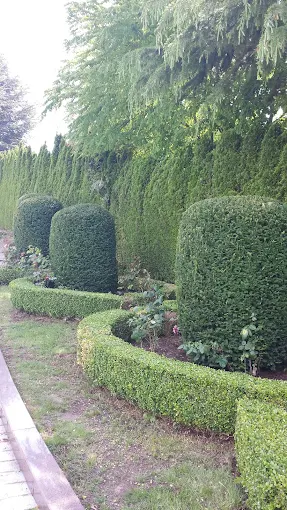
Hedge Trimming. Professional trimming and shaping for all hedge species common in New Westminster, including Western Red Cedar, Laurel, Photinia, Boxwood, Yew, and Portuguese Laurel. We maintain hedges to promote dense, healthy growth while keeping them within property boundaries and municipal height guidelines. Service is available on a one-time or scheduled recurring basis.
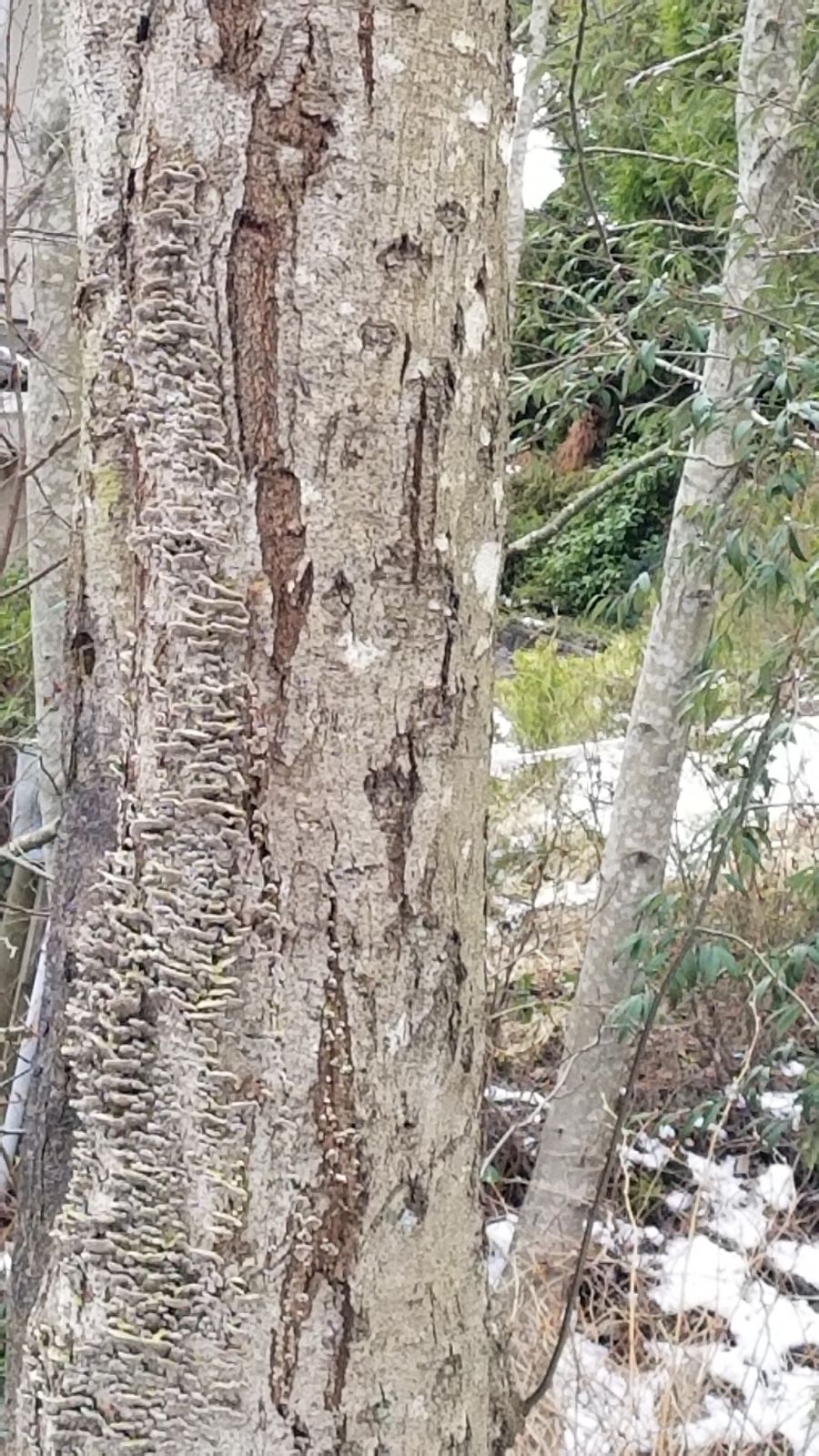
Arborist Reports. Comprehensive written assessments prepared by our ISA-certified arborists for tree removal permit applications, development permits, TRAQ risk assessments, real estate transactions, insurance claims, and neighbour disputes. Our reports are accepted by the City of New Westminster and meet the requirements of all standard permit categories.
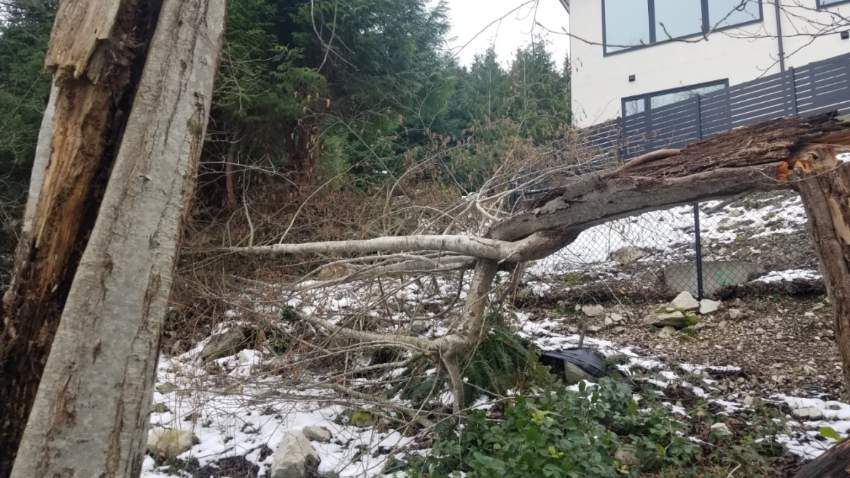
Emergency Tree Service. 24/7 response for storm-damaged, fallen, or imminently hazardous trees. Our emergency crews carry the equipment needed for rapid response, including chainsaws, rigging gear, and chipping equipment. Emergency service is available outside regular business hours. Call (604) 721-7370 for immediate assistance.
Land Clearing. For development sites and properties requiring the removal of multiple trees, we provide comprehensive land clearing services including tree removal, stump grinding, brush clearing, and site preparation. All work is performed in compliance with the City of New Westminster's tree protection and environmental regulations.
Frequently Asked Questions
How much does tree removal cost in New Westminster?
Tree removal costs in New Westminster vary based on the size of the tree, species, terrain, access conditions, and proximity to structures or utility lines. Typical cost ranges for 2025-2026 are:
- Small trees (under 6 metres / 20 feet): $300 to $600
- Medium trees (6 to 12 metres / 20 to 40 feet): $600 to $1,500
- Large trees (12 to 18 metres / 40 to 60 feet): $1,500 to $3,500
- Very large or complex removals (over 18 metres / 60+ feet, steep terrain, near structures): $3,500 to $10,000+
These ranges include sectional dismantling or felling, chipping of branches, and full cleanup. They do not include stump grinding (typically $150 to $500 per stump depending on access and size) or the municipal permit application fee. Properties on steep terrain in Sapperton, Brow of the Hill, or Connaught Heights may fall toward the higher end due to access limitations and the need for specialized rigging. Contact us at (604) 721-7370 for a free on-site estimate.
Do I need a permit to remove a tree in New Westminster?
Yes. Under New Westminster's Tree Protection and Regulation Bylaw, a permit is required before removing any tree with a trunk diameter of 30 cm or more at breast height (1.4 metres above the base) on private property. The permit application requires an arborist report from an ISA-certified arborist documenting the tree's species, size, condition, and the rationale for removal. Removing a protected tree without a permit can result in significant fines and mandatory replacement planting at a higher ratio. Aesthetic Tree handles the full permit process on your behalf, from the arborist assessment through to the application submission.
Are there heritage tree protections in New Westminster?
Yes. Trees in Queens Park and other heritage areas of New Westminster may be subject to additional protections beyond the standard tree bylaw. Heritage trees — those identified as having historical, cultural, or ecological significance — can face more stringent removal requirements, including higher replacement ratios, extended review periods, and potential denial of removal permits if the tree is determined to be healthy and structurally sound. If you own property in or near a heritage area, we recommend an early consultation with our arborists to understand the specific requirements that may apply to your trees before planning any work.
Can I remove a tree in Queensborough?
Trees in Queensborough are subject to the same New Westminster Tree Protection and Regulation Bylaw as the rest of the city. A permit is required for any protected tree (30 cm+ DBH). However, Queensborough's location on Lulu Island in the Fraser River means that some properties fall within or adjacent to riparian areas, which may trigger additional environmental protections under provincial and municipal regulations. Trees growing near the riverbank, along drainage channels, or within designated environmentally sensitive areas may require additional review. Black Cottonwoods, the dominant large tree species in Queensborough, are particularly common in these riparian zones. Our arborists can assess whether your specific tree and property location involve any additional environmental considerations beyond the standard tree removal permit.
What is the tree replacement requirement in New Westminster?
When a protected tree is removed in New Westminster, the property owner is required to plant replacement trees or pay into the city's tree replacement fund. The replacement ratio — the number of new trees required for each tree removed — depends on the size and species of the removed tree, with larger and more ecologically significant trees requiring greater replacement planting. Replacement trees must meet minimum size specifications at the time of planting and must be maintained for a specified period. The specific replacement ratio and requirements will be outlined in your tree removal permit. Aesthetic Tree can advise on appropriate replacement species for your property and coordinate the planting of replacement trees as part of the overall project.
Does Aesthetic Tree offer emergency tree service in New Westminster?
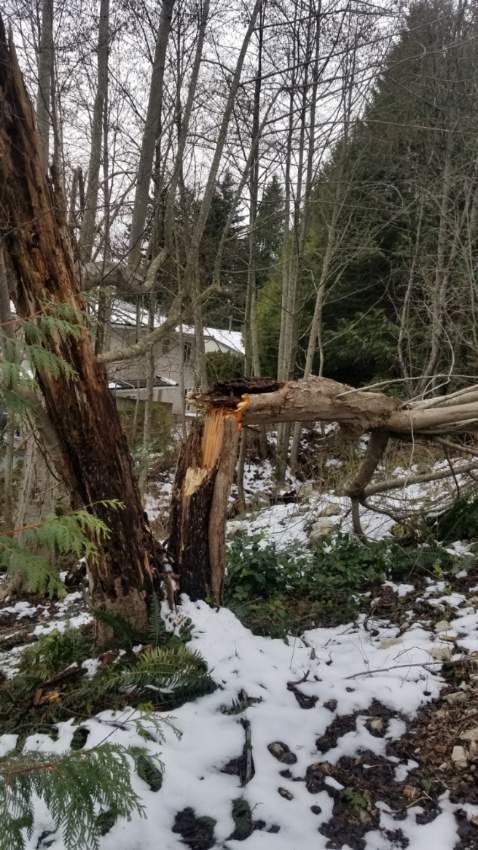
Yes. We provide 24/7 emergency response for storm-damaged, fallen, or imminently hazardous trees throughout all New Westminster neighbourhoods, including Queensborough, Sapperton, Queens Park, Downtown, and the Brow of the Hill. New Westminster's mature urban canopy and steep terrain make it particularly vulnerable to storm damage, with large trees and heavy limbs falling onto homes, vehicles, roads, and power lines during major wind events. Our emergency crews are equipped for rapid response and carry the rigging, cutting, and chipping equipment needed to safely clear hazardous trees and restore safe access. Emergency service is available outside regular business hours and carries a surcharge of 30% to 50% depending on conditions. Call (604) 721-7370 for emergency tree service in New Westminster.
What We Do
Services Available in New Westminster
Why Choose Us
Why New Westminster Trusts Us
Over 20 years of certified expertise, transparent pricing, and a 5.0-star Google rating make us New Westminster’s preferred tree care provider.
WCB Registered
Fully insured and WCB-compliant. Your property is protected on every job.
ISA Certified
Our arborists hold ISA credentials — the gold standard in professional tree care.
Best Prices
Transparent, competitive pricing with free on-site estimates. No hidden fees.
Service Areas
Serving Greater Vancouver & the Lower Mainland
Beyond New Westminster, our ISA-certified arborists provide professional tree care across the entire Lower Mainland. No job is too big or too small.
View all service areasNeed Tree Service
in New Westminster?
Book your free consultation with our ISA-certified arborists today. No obligation, no pressure — just honest advice from professionals who genuinely love tree care.