Years in North Vancouver
Trees Serviced
Liability Insurance
Google Rating
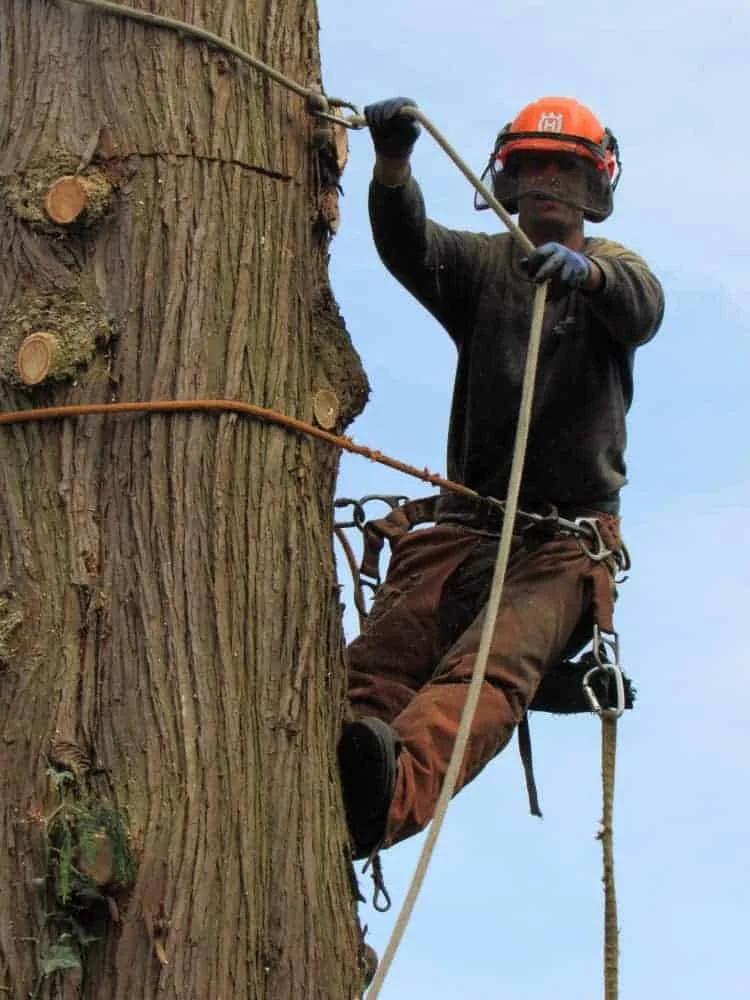
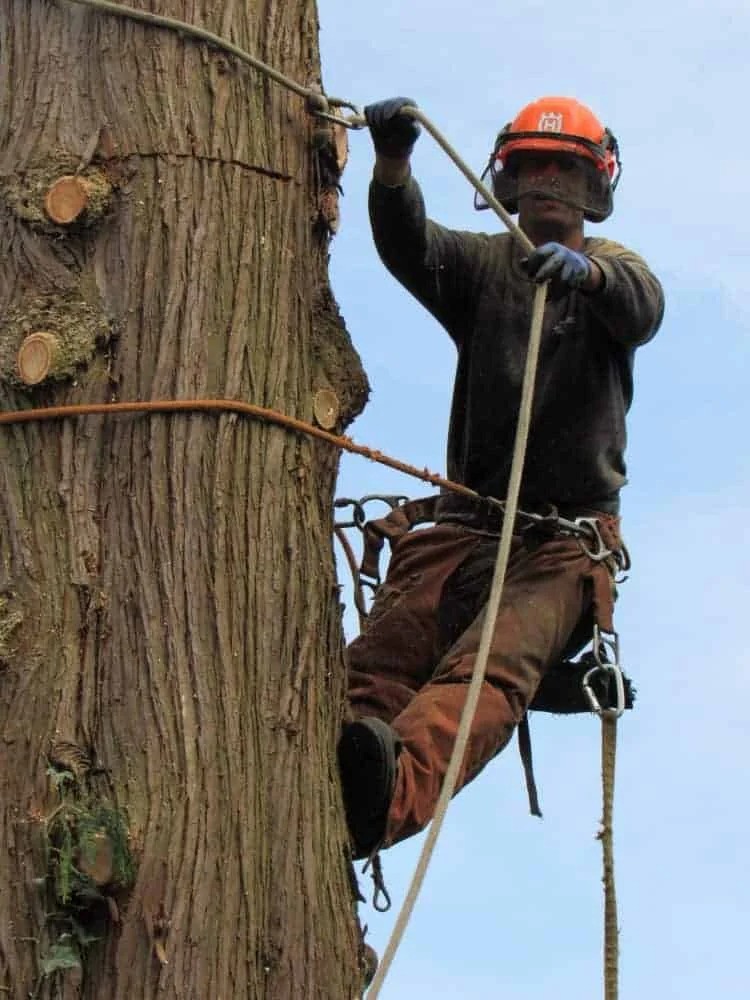
Aesthetic Tree & Hedge Services provides professional tree removal, pruning, stump grinding, hedge trimming, and arborist reports across the City and District of North Vancouver. From the steep, rain-soaked slopes of Lynn Valley to the mature waterfront canopies of Deep Cove, our ISA-certified arborists understand the unique terrain, tree species, and municipal bylaws that shape tree care on the North Shore. With 20+ years of experience, 100+ five-star Google reviews, and specialized rigging equipment built for mountainside work, we are one of the most trusted tree service companies serving North Vancouver. Call (604) 721-7370 for a free, no-obligation estimate.
What Tree Species Are Most Common in North Vancouver?
North Vancouver sits at the base of the Coast Mountains, where heavy annual rainfall (averaging 1,800 to 2,500 mm per year depending on elevation) and mild Pacific temperatures create ideal growing conditions for some of British Columbia's largest native species. The trees our arborists work with most frequently on the North Shore include:
- Douglas Fir (Pseudotsuga menziesii) — The dominant conifer across North Vancouver, Douglas Firs regularly reach 40 to 60 metres in residential areas adjacent to old-growth forest. Their height and shallow lateral root systems make them susceptible to windthrow during major storms.
- Western Red Cedar (Thuja plicata) — Found on almost every North Vancouver property, cedars thrive in the wet conditions but develop heavy, spreading canopies that can overload structures and shade out gardens. Mature specimens frequently reach 30+ metres.
- Western Hemlock (Tsuga heterophylla) — Common in shaded understory areas and north-facing slopes throughout Lynn Valley and the Upper Levels. Hemlocks grow rapidly in North Vancouver's climate and often require crown thinning to manage canopy density.
- Bigleaf Maple (Acer macrophyllum) — The largest native maple in North America, Bigleaf Maples develop massive spreading canopies that produce heavy leaf litter every autumn. They are common in Lower Lonsdale, Central Lonsdale, and Norgate.
- Red Alder (Alnus rubra) — A fast-growing pioneer species that colonizes disturbed sites, road edges, and stream banks. Alders have a relatively short lifespan of 40 to 60 years and frequently require removal as they decline.
Understanding each species' growth patterns, failure modes, and pruning tolerances is essential for safe, effective tree care in North Vancouver.
How Does the City of North Vancouver Tree Bylaw Work?
The City of North Vancouver and the District of North Vancouver are separate municipalities with their own tree protection bylaws. Property owners must follow the bylaw that applies to their specific jurisdiction.
City of North Vancouver Tree Bylaw
Under the City of North Vancouver's tree protection regulations, a permit is required before removing any tree with a trunk diameter of 20 cm or more measured at 1.4 metres above the base (diameter at breast height, or DBH). This applies to all trees on private property within city limits, including both front and back yards.
What the permit requires:
- A completed application form signed by the registered property owner
- A site plan showing the tree's location relative to buildings, property lines, and neighbouring structures
- An arborist report from an ISA-certified or BC-registered consulting arborist documenting the tree's species, size, health, structural condition, and the rationale for removal
- A replacement tree plan or payment of the required tree replacement deposit
Permit processing typically takes 2 to 4 weeks. Permits are valid for 6 months once issued. Removing a protected tree without a permit can result in fines and mandatory replacement planting at a higher ratio.
District of North Vancouver Tree Bylaw
The District of North Vancouver's Tree Protection and Management Bylaw covers the much larger geographic area extending from Deep Cove to Capilano and up to the mountain slopes. The District requires permits for the removal of any tree exceeding specified diameter thresholds on private property.
The District's bylaw also includes protections for trees within streamside protection and enhancement areas (SPEAs) and within environmentally sensitive zones. Properties near creeks, ravines, and watercourses face additional restrictions, and a Qualified Environmental Professional (QEP) report may be required in addition to the standard arborist report.
TRAQ assessments (Tree Risk Assessment Qualification) are commonly requested by both municipalities when a tree is being removed due to safety concerns. Our arborists hold TRAQ credentials and include risk assessments as part of our standard permit applications when needed.
Aesthetic Tree handles the entire permit process for both the City and District, from the initial arborist assessment through to the permit application submission.
Why Is Tree Work on the North Shore More Complex Than in Flat-Terrain Areas?
North Vancouver's topography sets it apart from every other municipality in Metro Vancouver. The terrain rises sharply from sea level at Lonsdale Quay to over 300 metres elevation in residential areas of Upper Lynn Valley, with some properties backing directly onto mountainside old-growth forest. This creates specific challenges:
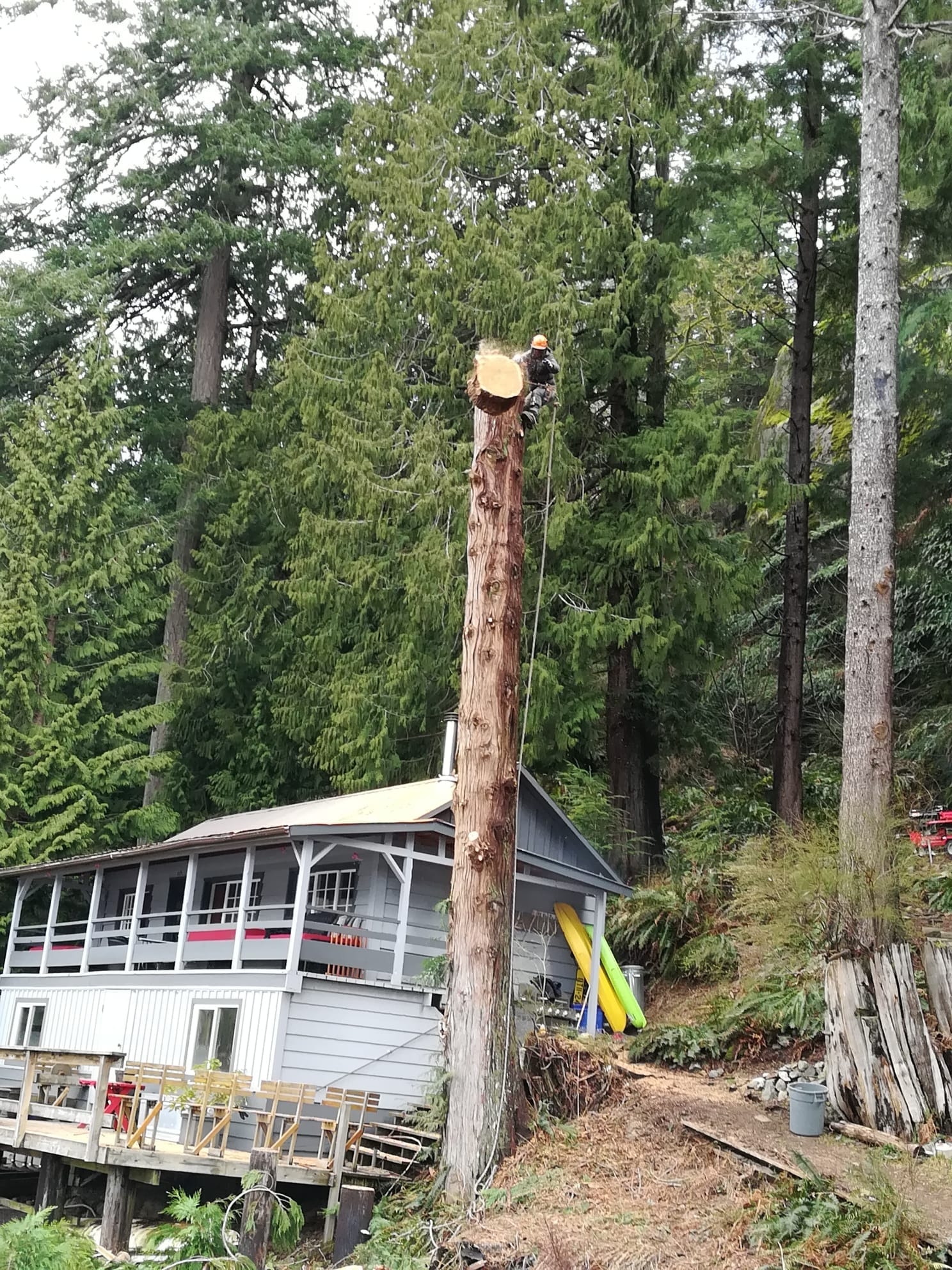
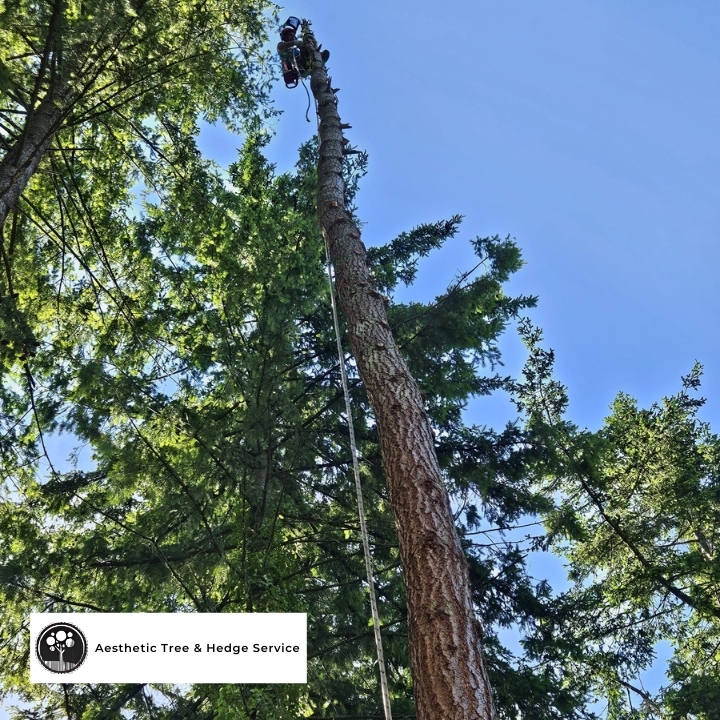
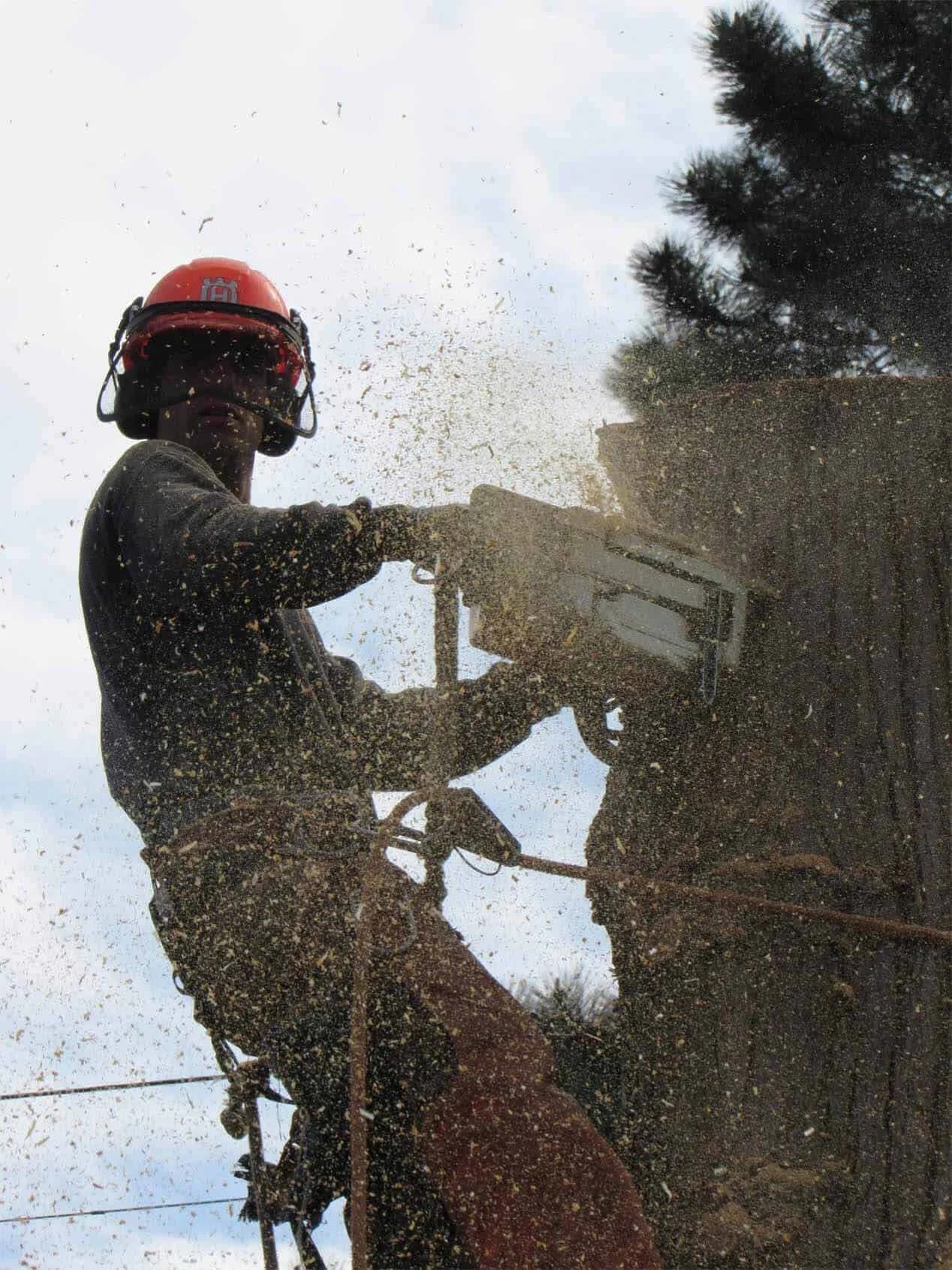
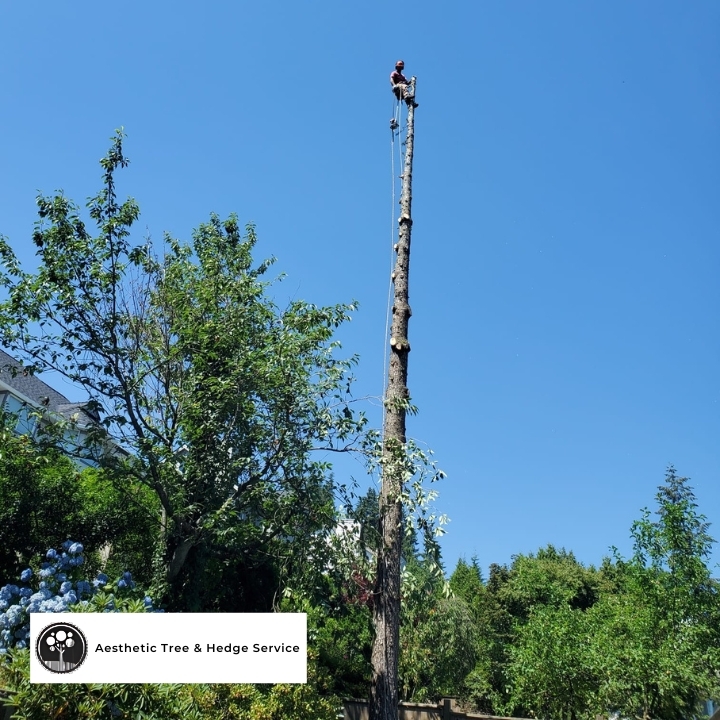
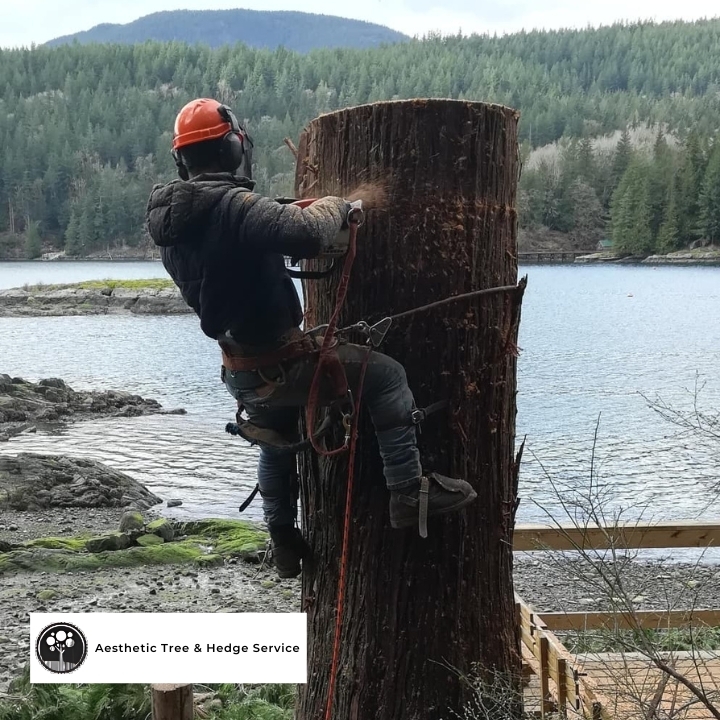
Steep slopes and limited access. Many properties in Lynn Valley, Blueridge, Pemberton Heights, and the Upper Levels have grades of 30% or steeper. Standard bucket trucks and cranes cannot set up safely on these slopes, which means our arborists rely on sectional removal with rigging: climbing the tree, cutting it into manageable sections from the top down, and lowering each piece on ropes to a controlled drop zone.
Proximity to old-growth forest. Properties along the edges of Lynn Headwaters Regional Park, the Capilano River corridor, and the Seymour watershed border intact forest stands. Trees on these properties are often taller and heavier than typical urban trees because they grew in forest conditions before the surrounding land was developed. Windthrow risk is particularly high when neighbouring trees are removed, exposing previously sheltered trees to the full force of North Shore storms.
Heavy rainfall and saturated soils. North Vancouver receives significantly more rainfall than Vancouver proper, and the combination of clay soils and steep grades can lead to slope instability. A tree removal on saturated hillside soil must account for the potential for ground movement once the tree's root system is no longer anchoring the slope. Our arborists assess soil conditions and may recommend retaining root systems in-ground or scheduling removal during drier months when slope stability is less of a concern.
BC Hydro line proximity. Many North Shore streets run along steep terrain where power lines are close to mature trees. Utility-line clearance work requires arborists with specific certifications, and we coordinate directly with BC Hydro when disconnection or line protection is needed.
What Does Tree Removal Cost in North Vancouver?
Tree removal costs in North Vancouver tend to run higher than in flatter areas due to the terrain, tree heights, and access challenges. Here are typical cost ranges for 2025-2026:
- Small trees (under 6 metres / 20 feet): $300 to $600
- Medium trees (6 to 12 metres / 20 to 40 feet): $600 to $1,500
- Large trees (12 to 18 metres / 40 to 60 feet): $1,500 to $3,500
- Very large or complex removals (over 18 metres / 60+ feet, steep terrain, near structures): $3,500 to $10,000+
These ranges include sectional dismantling or felling, chipping of branches, and full cleanup. They do not include stump grinding (typically $150 to $500 per stump depending on access and size) or the municipal permit application fee.
Factors that increase cost in North Vancouver:
- Steep terrain requiring hand-carry of equipment and debris (no machine access)
- Trees exceeding 25 metres that require extensive rigging
- Work within utility line clearance zones
- Properties with limited vehicle access, requiring longer carry distances
- Emergency storm damage response (30% to 50% surcharge)
- Saturated soil conditions requiring postponement or additional safety measures
We provide free on-site estimates for all North Vancouver properties, including those with challenging access.
What Tree Pruning and Maintenance Services Do We Offer in North Vancouver?
Professional pruning is the most cost-effective way to maintain tree health, manage canopy size, and reduce the risk of storm damage. Our arborists provide the following pruning services across North Vancouver:
- Crown thinning — Selectively removing interior branches to reduce wind resistance, improve light penetration, and reduce the overall weight of the canopy. This is our most-requested service for Douglas Firs and Western Red Cedars on the North Shore.
- Crown reduction — Shortening the overall height or spread of a tree by cutting back to appropriate lateral branches. This is used when trees have outgrown their space or when clearance from structures is needed.
- Deadwood removal — Removing dead, dying, or broken branches that could fall during storms. Critical for properties near walkways, driveways, and play areas.
- View pruning — Selectively thinning or windowing the canopy to restore views of the mountains, harbour, or city skyline without compromising the tree's health or structural integrity. View pruning is a common request in Upper Lonsdale, Pemberton Heights, and Edgemont Village.
- Structural pruning for young trees — Training developing trees with proper branch architecture to reduce future maintenance needs and prevent structural defects.
All pruning follows ISA best practice standards and the ANSI A300 pruning standard. We never top trees. Topping is harmful, creates long-term hazards, and is prohibited by many jurisdictions.
How Does Stump Grinding Work on North Vancouver's Steep Terrain?
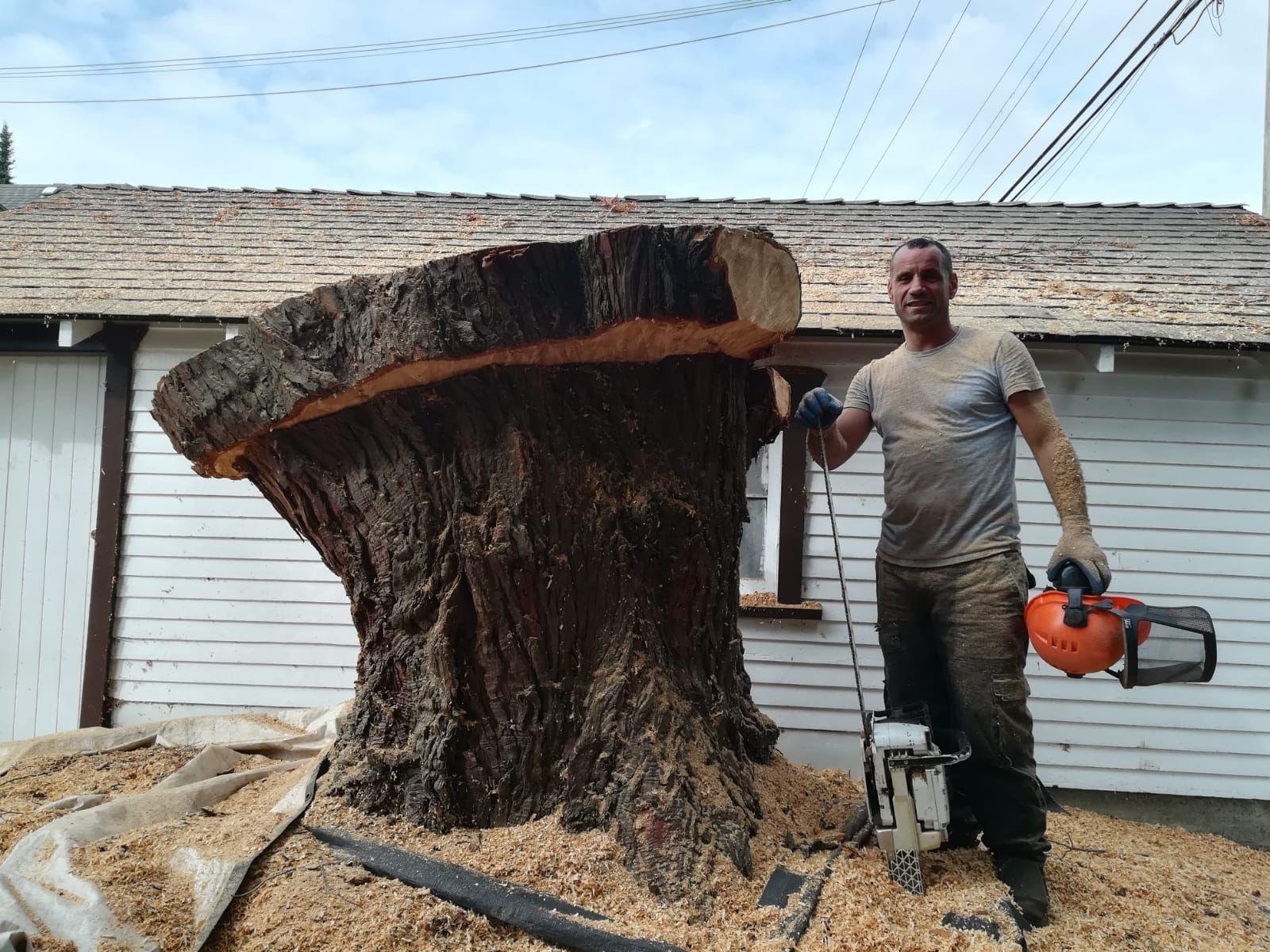
After a tree is removed, the stump remains. Stump grinding is the standard method for removing stumps in North Vancouver, using a specialized machine with a rotating carbide-tipped wheel that chips the stump and major surface roots into mulch.
Typical stump grinding costs:
- Small stumps (under 30 cm diameter): $150 to $250
- Medium stumps (30 to 60 cm diameter): $250 to $400
- Large stumps (over 60 cm diameter): $400 to $800+
On steep properties where standard stump grinder access is limited, we use compact tracked grinders that can navigate grades and tight spaces. In some cases on extremely steep slopes, hand-grinding or chemical treatment may be the only practical option.
The mulch produced by grinding is typically left in the hole to decompose naturally, or we can remove it and backfill with topsoil if you plan to replant or landscape the area.
What Hedge Trimming Services Are Available in North Vancouver?
Hedges are a defining feature of North Vancouver properties, providing privacy screening, windbreaks, and property boundary definition. The most common hedge species we maintain on the North Shore include:
- Western Red Cedar (Thuja plicata) — The most popular hedge species in North Vancouver, growing quickly in the wet climate but requiring regular annual or semi-annual trimming to maintain density and shape.
- Laurel (Prunus laurocerasus) — Common in Lower Lonsdale and Central Lonsdale, English Laurel grows aggressively and can reach 6+ metres if left unmanaged.
- Photinia — Frequently planted for its red new growth, Photinia hedges are common in Edgemont Village and Capilano.
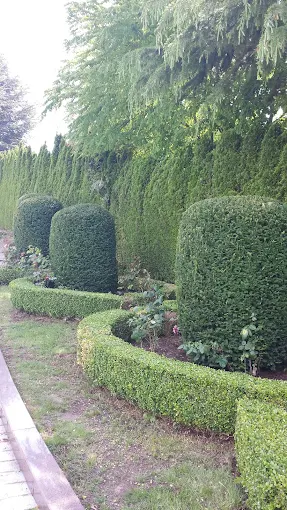
- Boxwood (Buxus) — Used for formal low hedges and foundation plantings.
- Yew (Taxus) — Slow-growing and shade-tolerant, common on older properties throughout the District.
Our hedge trimming crew serves residential and commercial properties across all North Vancouver neighbourhoods. We trim hedges to maintain clean lines, promote dense growth, and keep hedges within the height restrictions set by municipal bylaws and neighbour relations.
When Should You Request an Arborist Report in North Vancouver?
An arborist report is a professional assessment of a tree's species, size, health, structural condition, and risk level, prepared by an ISA-certified or consulting arborist. In North Vancouver, arborist reports are required in several situations:
- Tree removal permit applications — Both the City and District of North Vancouver require an arborist report as part of any tree removal permit application for protected trees.
- Development permit applications — Any new construction, renovation, addition, or laneway house project that may impact trees on the property requires a tree management plan prepared by a certified arborist.
- TRAQ risk assessments — When a tree is suspected of posing a safety risk (leaning, cracked, decayed, or storm-damaged), a Tree Risk Assessment Qualification (TRAQ) assessment provides a standardized risk rating that municipalities and insurance companies rely on.
- Real estate transactions — Buyers and sellers increasingly request arborist reports to understand the condition of significant trees on a property and any potential costs or liabilities.
- Neighbour disputes — When trees straddle property lines or overhanging branches create conflict, an independent arborist report provides an objective assessment.
- Insurance claims — After storm damage, an arborist report documents the tree's pre-storm condition and the nature of the failure for insurance purposes.
Our arborist reports are accepted by both the City and District of North Vancouver, as well as by real estate professionals, lawyers, and insurance adjusters.
Which North Vancouver Neighbourhoods Does Aesthetic Tree Serve?
We serve every neighbourhood across both the City and District of North Vancouver, including:
- Lynn Valley — Large lots with mature second-growth forest, steep terrain, and heavy tree coverage. One of our busiest service areas.
- Deep Cove — Waterfront and hillside properties with large conifers and limited road access.
- Lower Lonsdale (Lower Lons) — Denser urban area with street trees, smaller lots, and mixed species including ornamental and native trees.
- Central Lonsdale — Established residential area with mature maples, cedars, and mixed plantings.
- Upper Lonsdale — Higher elevation properties with larger lots and more significant tree coverage.
- Edgemont Village — Well-maintained residential area with a mix of native conifers and ornamental plantings.
- Capilano — Properties along the Capilano River corridor with significant native tree stands.
- Norgate — Compact residential area near the Lion's Gate Bridge approach.
- Pemberton Heights — Elevated properties with mountain and harbour views, where view pruning is frequently requested.
- Blueridge — Semi-rural hillside neighbourhood with large lots, mature forest, and challenging access.
No matter which North Vancouver neighbourhood you are in, we can provide a free on-site estimate within 48 hours.
Frequently Asked Questions About Tree Services in North Vancouver
Do I need a permit to remove a tree on my North Vancouver property?
In the City of North Vancouver, a permit is required for any tree with a trunk diameter of 20 cm or greater at 1.4 metres above the base. The District of North Vancouver has similar requirements. Both municipalities require an arborist report as part of the permit application. Removing a protected tree without a permit can result in significant fines. Aesthetic Tree handles the full permit process on your behalf.
How long does it take to get a tree removal permit in North Vancouver?
Permit processing typically takes 2 to 4 weeks for both the City and District. During peak season (spring and early summer), processing times can be longer. We recommend starting the permit process as early as possible, especially if your removal is tied to a construction timeline.
Can you remove trees on steep slopes in North Vancouver?
Yes. Steep-slope tree removal is one of our specialties. Our arborists use sectional removal with rigging techniques, lowering tree pieces on ropes to a controlled zone rather than felling them. We carry compact equipment that can be hand-carried to properties without vehicle access.
What is a TRAQ assessment and do I need one?
TRAQ stands for Tree Risk Assessment Qualification. It is a standardized method developed by the ISA for evaluating tree risk. Both the City and District of North Vancouver often require TRAQ assessments when trees are being removed due to safety concerns, or when development is planned near significant trees. Our arborists hold TRAQ credentials and can provide these assessments as part of your project.
How much does tree pruning cost in North Vancouver?
Pruning costs depend on the size of the tree, the type of pruning required, and access conditions. Typical ranges for North Vancouver properties are $300 to $800 for small to medium trees, and $800 to $2,500+ for large conifers requiring climbing and rigging. View pruning projects for multiple trees are typically quoted as a package.
Do you offer emergency tree service in North Vancouver?
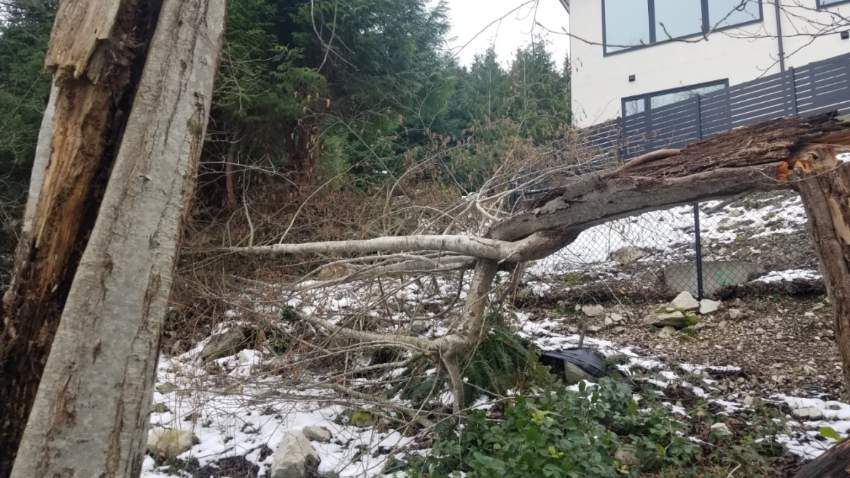
Yes. We provide 24/7 emergency response for storm-damaged, fallen, or hazardous trees across North Vancouver. Emergency service is available outside regular business hours and carries a surcharge of 30% to 50% depending on conditions. Call (604) 721-7370 for emergency tree service on the North Shore.
Do you offer stump grinding in North Vancouver?
Yes. Stump grinding in North Vancouver is part of our standard service. After a tree is removed, our commercial-grade grinders take the stump 6 to 12 inches below grade — deep enough for new lawn, garden beds, or fence posts. North Vancouver lots are often sloped with tight side access, so we use a compact track-mounted grinder that fits through standard gates and garden paths. We grind the stump and major surface roots, backfill the hole, and clean the site.
Why hire an ISA-certified arborist in North Vancouver?
An arborist in North Vancouver needs more than a chainsaw. The North Shore has mature conifers, steep slopes, and two separate tree bylaws — the City and the District of North Vancouver each regulate tree work differently. An ISA-certified arborist diagnoses tree health before acting, plans removals and pruning to ANSI standards, produces the arborist reports both municipalities require for permits, and carries the rigging and climbing skill that sloped North Vancouver lots demand. Aesthetic Trees arborists hold ISA certification and TRAQ qualification, and the company carries $5M liability insurance.
What We Do
Services in North Vancouver
Our Work
Tree Care in North Vancouver

Why Choose Us
Why North Vancouver Trusts Us
Over 20 years of certified expertise, transparent pricing, and a 5.0-star Google rating make us North Vancouver’s preferred tree care provider.
WCB Registered
Fully insured and WCB-compliant. Your property is protected on every job.
ISA Certified
Our arborists hold ISA credentials — the gold standard in professional tree care.
Best Prices
Transparent, competitive pricing with free on-site estimates. No hidden fees.
Service Areas
Serving Greater Vancouver
Beyond North Vancouver, our ISA-certified arborists provide professional tree care across the entire Lower Mainland.
View all service areasNeed Tree Service
in North Vancouver?
Book your free consultation with our ISA-certified arborists today. No obligation, no pressure — just honest advice from professionals who genuinely love tree care.