
ISA-Certified Arborists · Greater Vancouver
Tree Service
West Vancouver
ISA-Certified Arborists · North Shore
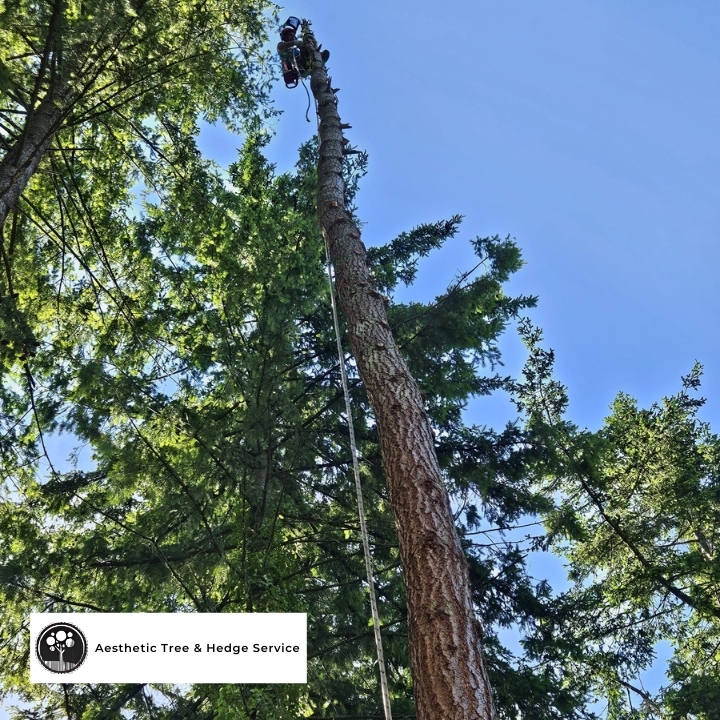
Aesthetic Tree & Hedge Services provides professional tree removal, pruning, stump grinding, hedge trimming, and arborist reports across the District of West Vancouver. From the heritage estates of the British Properties to the oceanfront lots of Caulfeild and Horseshoe Bay, our ISA-certified arborists specialize in the high-value properties, steep hillside terrain, and mature tree canopies that define West Vancouver. With 20+ years of experience, 100+ five-star Google reviews, and crane-assisted removal capabilities, we are one of the most trusted tree service companies on the North Shore. Call (604) 721-7370 for a free, no-obligation estimate.
What Tree Species Are Most Common in West Vancouver?
West Vancouver occupies a dramatic stretch of coastline and mountainside between the Lions Gate Bridge and Horseshoe Bay, with elevations ranging from sea level to over 400 metres in residential areas. The combination of Pacific maritime climate, well-drained slopes, and sheltered microclimates supports a distinctive mix of native and ornamental species:
- Douglas Fir (Pseudotsuga menziesii) — The dominant native conifer, Douglas Firs in West Vancouver regularly exceed 40 metres on upper-slope properties in the British Properties, Chartwell, and Sentinel Hill. Their size and height make them both impressive landscape features and significant risk factors during windstorms.
- Western Red Cedar (Thuja plicata) — Found throughout the municipality from Ambleside to Horseshoe Bay, cedars thrive in West Vancouver's wet winters and provide critical privacy screening on high-value lots. Mature cedars can develop canopy spreads exceeding 15 metres.
- Arbutus (Arbutus menziesii) — Canada's only native broadleaf evergreen, Arbutus trees are found on rocky, well-drained slopes throughout West Vancouver, particularly in Caulfeild, Eagle Harbour, and Sandy Cove. Arbutus are protected under the District's environmental policies due to their limited range and ecological significance.
- Garry Oak (Quercus garryana) — While more common on Vancouver Island and the Gulf Islands, scattered Garry Oak specimens occur in West Vancouver's drier, south-facing exposures. These trees are provincially significant and receive strong protection.
- Ornamental Japanese Maples (Acer palmatum cultivars) — Extensively planted on West Vancouver properties for their architectural form, seasonal colour, and suitability to the Pacific Northwest climate. Japanese maples require skilled pruning to maintain their natural form.
- Monkey Puzzle (Araucaria araucana) — Heritage plantings of these distinctive South American conifers are found on several older West Vancouver estates, particularly in Ambleside and Dundarave.
Understanding each species' value, vulnerability, and pruning requirements is essential for effective tree management on West Vancouver's high-value properties.
How Does the District of West Vancouver Tree Bylaw Work?
The District of West Vancouver regulates tree removal through its tree protection bylaw, which applies to all private property within the municipality. A permit is required before removing any tree that meets or exceeds the specified trunk diameter threshold measured at 1.4 metres above the base (DBH).
What the permit application requires:
- A completed Tree Cutting Permit application signed by the registered property owner
- A site plan or survey showing the tree's location relative to buildings, property lines, and setbacks
- An arborist report from an ISA-certified or registered consulting arborist documenting the tree's species, size, condition, risk level, and the rationale for removal
- A TRAQ (Tree Risk Assessment Qualification) assessment when removal is being requested due to safety or structural concerns
- A replacement tree plan specifying species, caliper, and planting location
Processing time is typically 2 to 4 weeks, though complex applications involving multiple trees, heritage trees, or environmentally sensitive areas may take longer.
Replacement requirements: The District requires replacement trees for every tree removed. The required caliper and number of replacements depends on the size of the removed tree. Cash-in-lieu payments are available when planting on-site is not feasible.
Environmentally sensitive areas: Properties near streams, ravines, and steep-slope areas designated as environmentally sensitive may face additional requirements, including environmental assessments and Development Permit Area (DPA) restrictions.
Heritage trees: West Vancouver maintains a registry of significant and heritage trees. Removing a heritage-listed tree requires additional approvals and may involve public notification.
Aesthetic Tree manages the entire permit process for West Vancouver property owners, from the initial arborist assessment through to the application submission and replacement tree planting.
Why Is West Vancouver Known for Complex and High-Stakes Tree Work?
West Vancouver combines almost every factor that makes tree work challenging: steep terrain, extremely valuable properties, massive mature trees, and ocean-view preservation requirements. Our arborists regularly encounter conditions here that are rare in other Metro Vancouver municipalities.
High-value property environments. West Vancouver is home to some of the most valuable residential properties in Canada. A single tree failure can cause hundreds of thousands of dollars in damage to a home, and a poorly executed tree removal can damage driveways, retaining walls, landscaping, pools, and neighbouring structures. Our crews carry $5 million in liability insurance and use precision rigging techniques to ensure zero property damage during removals.
Steep hillside terrain. The British Properties, Chartwell, Sentinel Hill, and upper Caulfeild feature residential lots on grades of 30% to 60%. Standard bucket trucks and small cranes often cannot operate on these slopes. For complex removals in these areas, we use crane-assisted removal: a large crane positioned on the nearest accessible road lifts tree sections out over the property, eliminating the need to lower pieces through tight spaces between structures. Crane-assisted removals reduce time on-site, minimize ground disturbance, and allow us to safely remove trees that would otherwise require days of hand-rigging.
Ocean and mountain view preservation. One of the most common service requests in West Vancouver is view pruning, also called vista pruning. Property owners in Ambleside, Dundarave, British Properties, Panorama Village, and Chartwell often need selective canopy thinning or windowing to restore blocked views of the harbour, Burrard Inlet, Vancouver skyline, or North Shore mountains. View pruning requires an artistic eye combined with arboricultural knowledge: the goal is to open sightlines without compromising tree health, structural integrity, or the natural form of the canopy. Our arborists plan view-pruning projects with the property owner on-site, identifying the exact sightlines to be restored and the minimum amount of canopy reduction needed to achieve them.
Proximity to protected natural areas. Properties in Horseshoe Bay, Eagle Harbour, Gleneagles, and upper Caulfeild border Lighthouse Park, Cypress Provincial Park, and other protected natural areas. Tree work on adjacent properties must account for wildlife corridors, raptor nesting sites, and environmental buffer zones.
What Does Tree Removal Cost in West Vancouver?
Tree removal in West Vancouver is among the most expensive in Metro Vancouver, reflecting the larger tree sizes, steeper terrain, and higher-value property environments. Here are typical cost ranges for 2025-2026:
- Small trees (under 6 metres / 20 feet): $400 to $800
- Medium trees (6 to 12 metres / 20 to 40 feet): $800 to $2,000
- Large trees (12 to 18 metres / 40 to 60 feet): $2,000 to $5,000
- Very large or complex removals (over 18 metres / 60+ feet, steep terrain, crane-assisted): $5,000 to $15,000+
- Crane-assisted removals for hillside properties with no direct access: $3,000 to $20,000+ depending on crane size and duration
These ranges include sectional dismantling or crane lift, chipping, and full site cleanup. They do not include stump grinding (typically $200 to $600 per stump) or the municipal permit fee.
Factors that increase cost in West Vancouver:
- Crane mobilization and operation (typically $2,000 to $5,000+ for the crane alone)
- Steep terrain with no vehicle access to the tree
- Trees exceeding 30 metres (common in the British Properties and Chartwell)
- Proximity to high-value structures requiring precision rigging
- Work within BC Hydro utility line clearance zones
- Environmental restrictions requiring specialized timing or methods
- Emergency storm damage response (30% to 50% surcharge)
We provide free on-site estimates for all West Vancouver properties. For crane-assisted projects, we include crane costs in the written quote so there are no surprises.
What View Pruning Services Does Aesthetic Tree Offer in West Vancouver?
View pruning is one of our most-requested services in West Vancouver. Property values on the North Shore are closely tied to ocean, mountain, and city views, and strategic canopy management can preserve or restore views worth hundreds of thousands of dollars in property value.
Our view pruning approach:
- On-site consultation — We meet you at your property to identify the specific views you want to restore or maintain. We examine the sightlines from key rooms, decks, and outdoor living areas.
- Species assessment — We evaluate each tree in the view corridor, noting species, growth rate, health, and response to pruning. Some species (like Douglas Fir) tolerate selective limb removal well; others (like Arbutus) require more conservative approaches.
- Pruning plan — We develop a plan that achieves maximum view improvement with minimum canopy impact. Techniques include crown thinning (removing interior branches to create transparency), windowing (removing specific branches to create a framed view), and selective limb removal.
- Execution — Our climbing arborists execute the plan with precision, making final adjustments while in the canopy based on real-time sightline checks from the viewing position.
- Maintenance schedule — We recommend a maintenance pruning cycle (typically every 2 to 3 years) to keep views open as the canopy regrows.
Important: View pruning must comply with the District's tree bylaw. Excessive pruning that harms or kills a tree can result in fines and mandatory replacement. Our approach prioritizes tree health while maximizing view benefit.
How Does Stump Grinding Work in West Vancouver?
After a tree is removed, the stump and major surface roots remain. Stump grinding removes the visible stump to 15 to 30 cm below grade, allowing the area to be replanted or landscaped.
Typical stump grinding costs in West Vancouver:
- Small stumps (under 30 cm diameter): $200 to $300
- Medium stumps (30 to 60 cm diameter): $300 to $500
- Large stumps (over 60 cm diameter): $500 to $1,000+
On steep West Vancouver properties, we use compact tracked stump grinders that can navigate slopes and tight spaces. For stumps in areas inaccessible to any machine, we offer hand-grinding or recommend chemical decomposition treatments.
What Hedge Services Are Available in West Vancouver?
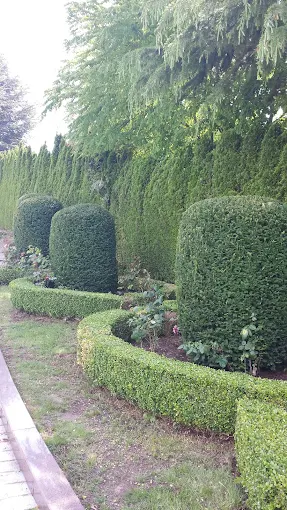
West Vancouver properties are known for their mature, well-maintained hedges, which serve as privacy screens, wind barriers, and architectural landscape elements. The most common hedge species we maintain include:
- Western Red Cedar (Thuja plicata) — The dominant hedge species in West Vancouver, cedar hedges require annual or semi-annual trimming to maintain density and shape. Many West Vancouver cedar hedges are 3 to 5 metres tall.
- English Laurel (Prunus laurocerasus) — Common in Ambleside and Dundarave, laurel grows aggressively and needs regular control to prevent it from overtaking adjacent plantings.
- Portuguese Laurel (Prunus lusitanica) — Increasingly popular as a more refined alternative to English Laurel, with slower growth and a tidier natural form.
- Yew (Taxus baccata) — Found on many older West Vancouver estates, yew hedges are slow-growing, shade-tolerant, and long-lived.
- Boxwood (Buxus) — Used for formal low hedges and parterre-style plantings on estate properties.
We provide one-time and recurring hedge maintenance for residential and strata properties across West Vancouver.
When Do You Need an Arborist Report in West Vancouver?
Arborist reports are required or recommended in several common situations for West Vancouver property owners:
- Tree removal permits — The District requires an arborist report for any protected tree removal application.
- Development and building permits — New construction, renovations, pools, retaining walls, and any ground disturbance near existing trees requires a tree management plan prepared by a certified arborist.
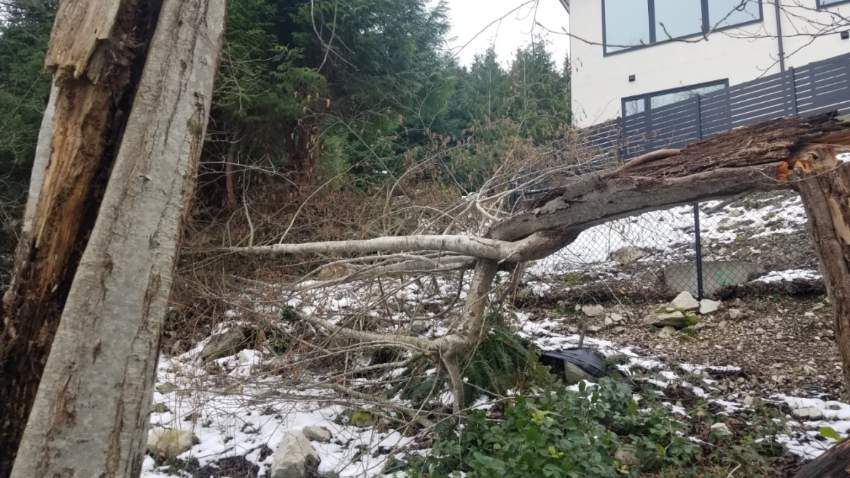
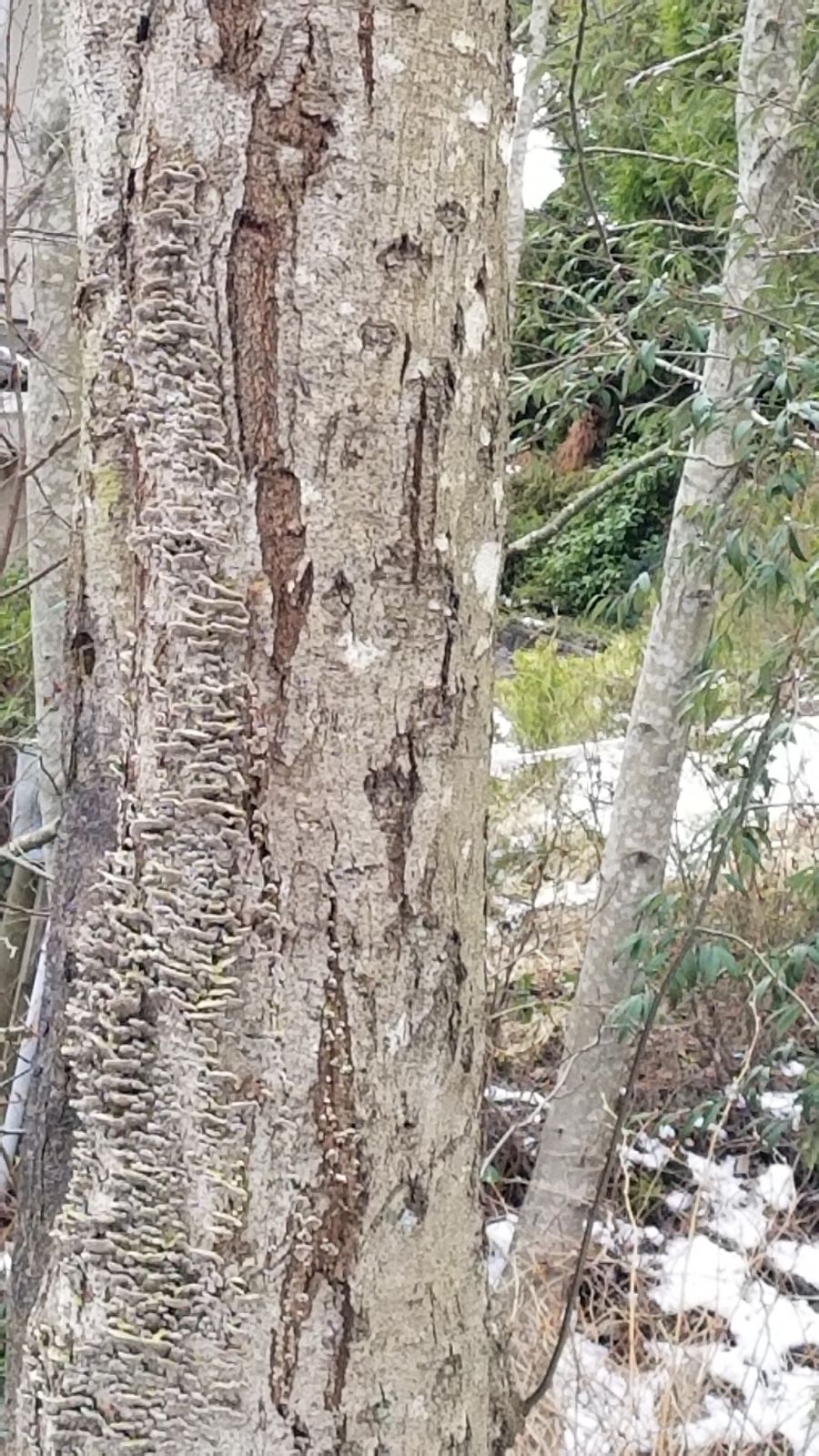
- TRAQ risk assessments — When a tree appears hazardous (leaning, cracked trunk, fungal fruiting bodies, root heaving), a TRAQ assessment provides a standardized risk evaluation.
- View-related requests — Some view pruning proposals require arborist documentation to demonstrate that the proposed work will not harm the tree.
- Real estate due diligence — Buyers of West Vancouver properties often request arborist reports to understand the condition of large trees and any associated risks or future costs.
- Insurance claims — Storm damage, tree failure, and related property damage claims typically require professional arborist documentation.
- Neighbour disputes — Overhanging branches, root intrusion, and view obstruction between properties are common in West Vancouver due to the steep terrain and dense tree cover.
Our arborist reports comply with District of West Vancouver requirements and are accepted by municipal planning departments, real estate professionals, lawyers, and insurance companies.
Which West Vancouver Neighbourhoods Does Aesthetic Tree Serve?
We serve every neighbourhood in the District of West Vancouver, including:
- British Properties — Large estate lots on steep hillside terrain with massive Douglas Firs, cedars, and extensive landscaping. Crane-assisted removals are frequently required.
- Ambleside — West Vancouver's commercial and residential core, with a mix of older heritage trees, street plantings, and newer developments.
- Dundarave — Charming village-area neighbourhood with established gardens and mature ornamental and native trees.
- Caulfeild — Rocky, forested waterfront neighbourhood near Lighthouse Park with significant native Arbutus and Douglas Fir.
- Horseshoe Bay — Coastal village at the western end of West Vancouver, with waterfront properties and steep hillside lots overlooking the ferry terminal and Howe Sound.
- Eagle Harbour — Secluded waterfront community with large lots, mature forest, and limited road access.
- Gleneagles — Residential area above Horseshoe Bay with golf course-adjacent properties and large trees.
- Panorama Village — Elevated community with significant mountain and ocean views, where view pruning is a frequent request.
- Sandy Cove — Quiet residential area between Dundarave and Caulfeild with waterfront and hillside properties.
- Chartwell — Upper British Properties area with some of West Vancouver's largest lots, steepest terrain, and tallest trees.
Every neighbourhood in West Vancouver presents unique access and terrain challenges. We bring the right equipment and crew size for every job.
Frequently Asked Questions About Tree Services in West Vancouver
Do I need a permit to remove a tree on my West Vancouver property?
Yes. The District of West Vancouver requires a Tree Cutting Permit for trees exceeding the specified diameter threshold. The application requires an arborist report, site plan, and replacement tree plan. Removing a protected tree without a permit can result in significant fines. Aesthetic Tree manages the entire permit process for you.
How much does crane-assisted tree removal cost in West Vancouver?
Crane-assisted removals typically range from $5,000 to $20,000+ depending on tree size, crane size required, access conditions, and the number of trees being removed. The crane itself typically costs $2,000 to $5,000 for mobilization and a day of operation. Crane work is often more cost-effective than multi-day rigging projects on steep hillside properties.
Can you prune trees to improve my ocean view without killing them?
Yes. View pruning, when performed correctly by ISA-certified arborists, is a standard arboricultural practice that can significantly improve sightlines without harming the tree. We use selective techniques including crown thinning, windowing, and targeted limb removal. The key is removing the minimum amount of canopy needed to achieve the desired view, which preserves tree health and complies with the District's tree bylaw.
What is the difference between topping a tree and proper view pruning?
Topping is the indiscriminate cutting of a tree's main stems back to stubs. It is harmful, creates long-term structural hazards (through the growth of weakly attached epicormic shoots), and violates industry standards. Proper view pruning involves selective removal of specific branches to create transparency or windows in the canopy while maintaining the tree's natural structure and health. We never top trees.
Do you work on Arbutus trees in West Vancouver?
Yes, but with particular care. Arbutus (Arbutus menziesii) are Canada's only native broadleaf evergreen and are ecologically significant. They do not heal pruning wounds the way most trees do, so pruning must be conservative and properly timed. Dead limb removal and light crown cleaning are the most common Arbutus services we provide.
How often should cedar hedges be trimmed in West Vancouver?
In West Vancouver's wet climate, Western Red Cedar hedges grow vigorously and benefit from trimming once or twice per year. We recommend a main trim in late June to early August (after the spring growth flush) and an optional light trim in late autumn. Regular trimming keeps the hedge dense and prevents it from becoming top-heavy or developing bare interior sections.
What We Do
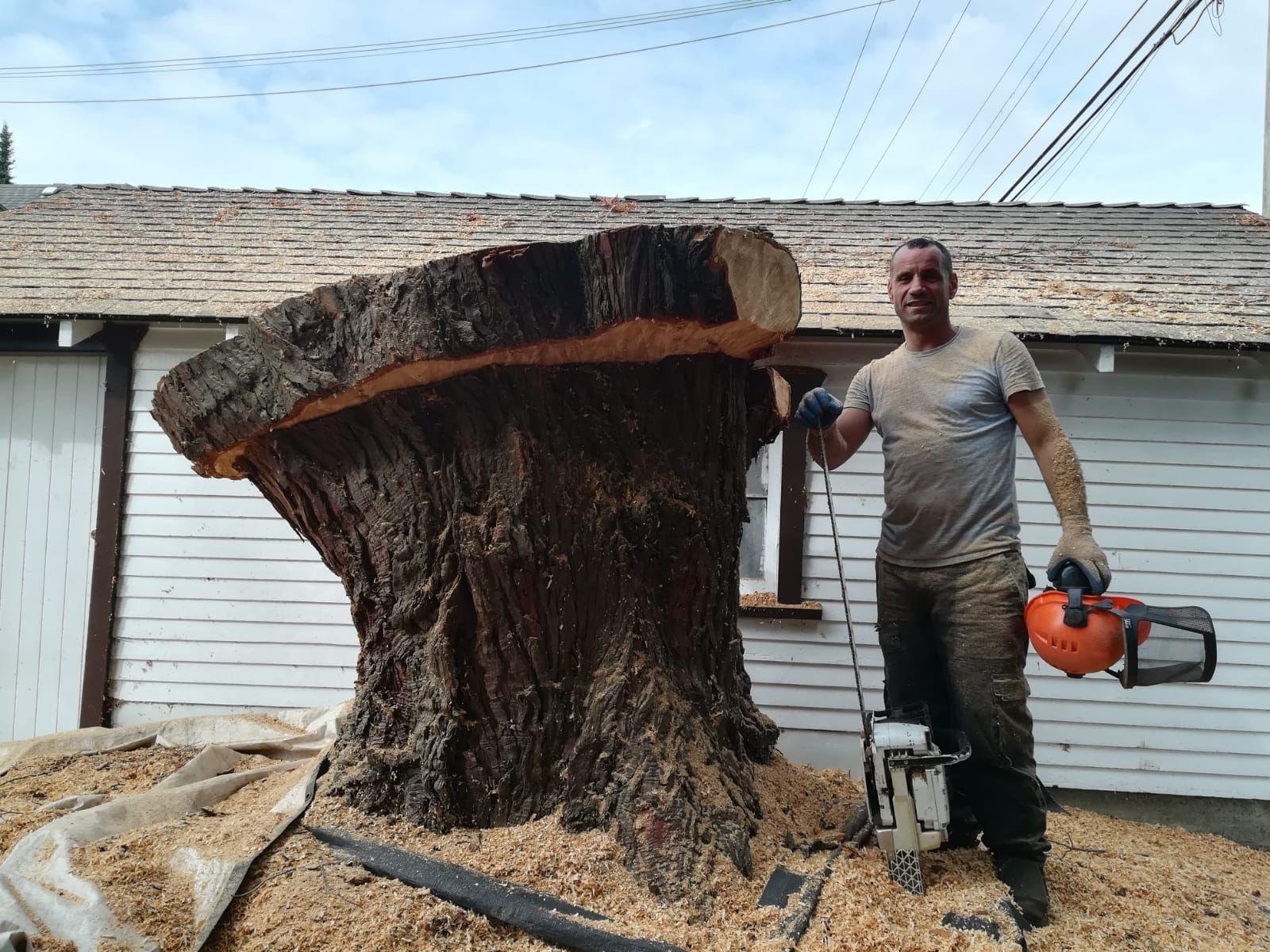
Services Available in West Vancouver
Why Choose Us
Why West Vancouver Trusts Us
Over 20 years of certified expertise, transparent pricing, and a 5.0-star Google rating make us West Vancouver’s preferred tree care provider.
WCB Registered
Fully insured and WCB-compliant. Your property is protected on every job.
ISA Certified
Our arborists hold ISA credentials — the gold standard in professional tree care.
Best Prices
Transparent, competitive pricing with free on-site estimates. No hidden fees.
Service Areas
Serving Greater Vancouver & the Lower Mainland
Beyond West Vancouver, our ISA-certified arborists provide professional tree care across the entire Lower Mainland. No job is too big or too small.
View all service areasNeed Tree Service
in West Vancouver?
Book your free consultation with our ISA-certified arborists today. No obligation, no pressure — just honest advice from professionals who genuinely love tree care.