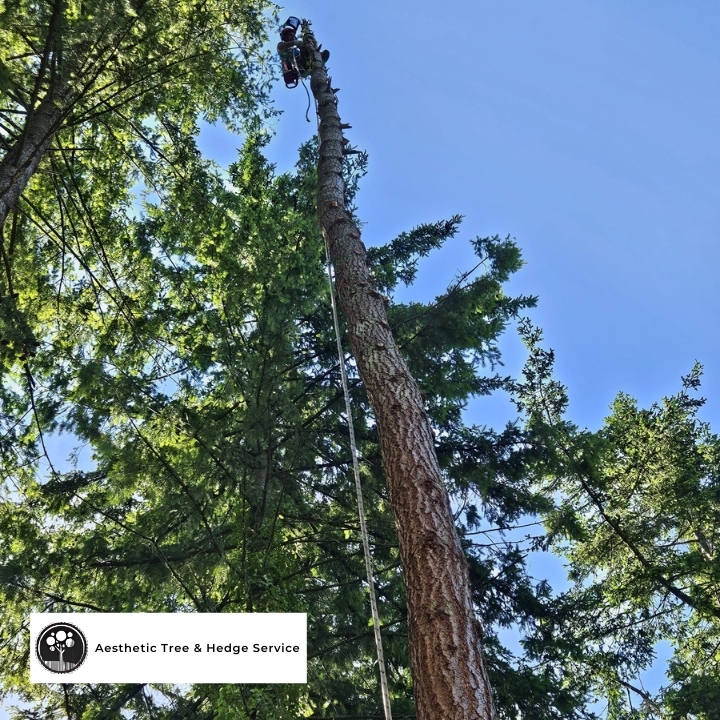
Vancouver Tree Cutting & Pruning
Expert Crown Cleaning, Thinning, and Structural Pruning in Vancouver
Years Experience
Trees Serviced
Liability Insurance
Google Rating
Professional tree cutting and pruning keeps your trees healthy, structurally sound, and visually balanced. Aesthetic Tree & Hedge Services provides crown cleaning, deadwood removal, canopy thinning, structural pruning, and controlled height reduction across Vancouver. Our ISA-certified arborists follow the 25% rule — never removing more than a quarter of live canopy in a single season — and schedule all work around species-specific dormancy periods and the March 15 to August 15 nesting season. With 20+ years of experience and 100+ five-star Google reviews, we deliver results that keep your trees thriving for decades. Call (604) 721-7370 for a free estimate.
What Is the Difference Between Tree Cutting, Pruning, and Trimming?
These terms are often used interchangeably, but they describe different levels of tree care:
- Pruning is the selective removal of specific branches to improve tree health, structure, or safety. It follows ISA standards and requires knowledge of tree biology to avoid causing harm. Pruning includes crown cleaning, thinning, raising, and reduction.
- Trimming generally refers to lighter maintenance work focused on shaping and aesthetics, such as removing small branches that overhang a walkway or cutting back growth that blocks a window.
- Tree cutting in the Vancouver market typically refers to more significant branch removal, including large limb removal, crown reduction, and preparation for partial or full tree removal.
All three types of work should be performed by a certified arborist or trained tree care professional. Improper cuts — especially flush cuts, stub cuts, and topping — cause long-term damage that weakens the tree and creates future hazard risks.
What Types of Pruning Do Vancouver Trees Actually Need?
Crown Cleaning (Deadwood Removal)
Crown cleaning removes dead, dying, diseased, and broken branches from throughout the canopy. This is the most common and most important type of pruning for mature trees. Dead branches are unpredictable — they can fall in calm weather without warning. Regular crown cleaning every 3 to 5 years significantly reduces the risk of property damage and personal injury.
Crown Thinning
Thinning selectively removes live branches to reduce canopy density, allowing more light and air to penetrate the crown. This reduces wind resistance (lowering the risk of windthrow during storms), improves air circulation (reducing fungal disease pressure), and allows light to reach understory plants and lawns.
A proper thinning removes no more than 25% of the live canopy in a single session. Removing more than this triggers a stress response that can lead to excessive water sprout growth, sunscald on previously shaded bark, and overall decline.
Crown Raising
Crown raising removes lower branches to increase clearance over walkways, driveways, streets, and structures. In Vancouver, this is commonly needed when branches obstruct pedestrian sidewalks (the City requires a minimum 2.4-metre clearance) or encroach on neighbouring properties.
Crown Reduction
Crown reduction lowers the overall height and spread of a tree by cutting back to appropriate lateral branches. This is the correct alternative to topping. While topping removes the entire top of the tree with indiscriminate heading cuts, crown reduction maintains the tree's natural form and branch structure.
Topping is never acceptable. It removes the tree's food-producing canopy, triggers a flush of weakly attached water sprouts, creates large wounds that invite decay, and ultimately produces a more hazardous tree than the one you started with. The ISA, the City of Vancouver, and every credible arboricultural organization recommend crown reduction over topping in all circumstances.
Structural Pruning (Young Trees)
Structural pruning trains young trees to develop a single dominant leader and well-spaced scaffold branches. This early investment prevents the co-dominant stems and included bark that are the leading cause of tree failure in mature urban trees. For newly planted street trees and yard trees, structural pruning in years 3 through 10 is the single most effective thing a property owner can do to ensure long-term safety.
How Much Does Tree Cutting and Pruning Cost in Vancouver?
Pruning costs depend on the tree's size, species, condition, access, and the extent of work required:
- Small trees (under 6 metres): $200 to $400
- Medium trees (6 to 12 metres): $400 to $800
- Large trees (12 to 18 metres): $800 to $1,600
- Very large trees (over 18 metres): $1,600 to $3,200+
These ranges include labour, equipment, chipping of removed branches, and site cleanup. Factors that affect pricing include:
- Number of trees to be pruned (multi-tree discounts are common)
- Proximity to structures, fences, or power lines requiring technical rigging
- Whether a crane or aerial lift is needed for access
- Extent of deadwood and hazard reduction required
We provide free on-site estimates with a written scope of work detailing exactly which branches will be removed and why.
When Is the Best Time to Prune Trees in Vancouver?
The ideal pruning window depends on the species and the type of work being done:
Dormant season (November to February) is best for most deciduous trees. The tree is not actively growing, the branch structure is fully visible without leaves, and the risk of disease transmission is lower. This is the preferred window for structural pruning, crown reduction, and major deadwood removal.
Late spring to early summer is acceptable for light pruning and crown cleaning on most species, but you must schedule around the March 15 to August 15 nesting season. Under the federal Migratory Birds Convention Act, it is illegal to disturb active nests. Our arborists conduct nest surveys before beginning work during this period.
Species-specific timing:
- Fruit trees (apple, cherry, plum): Prune in late winter (January to February) before bud break for best fruit production.
- Maple trees: Prune in late summer or fall to avoid excessive sap bleeding that occurs with winter or spring pruning.
- Birch trees: Prune in late summer to early fall; birch are susceptible to bronze birch borer, and pruning wounds in spring attract the pest.
- Flowering trees (dogwood, magnolia): Prune immediately after flowering to avoid removing next year's flower buds.
- Evergreen conifers (Douglas Fir, Western Red Cedar): Can be pruned year-round, but light pruning in late spring after new growth has hardened off is ideal.
Why Should You Never Top a Tree?
Tree topping — the practice of cutting all branches back to stubs or removing the top of the tree entirely — is one of the most harmful things you can do to a tree. Despite being common in Vancouver decades ago, it is now universally condemned by arboricultural professionals. Here is why:
- Starvation. Removing the entire canopy removes the tree's ability to photosynthesize and feed itself. The tree is forced to use stored energy reserves to produce new growth.
- Weak regrowth. The water sprouts that emerge from topping cuts are attached only to the outer ring of wood, not to the structural wood of the original branch. They grow rapidly but are inherently weak and prone to failure.
- Decay entry. Large topping cuts cannot compartmentalize properly. Decay fungi colonize the exposed wood and spread into the trunk, weakening the entire tree from the inside.
- Increased hazard. Within 5 to 10 years, a topped tree is typically more hazardous than it was before topping, because its regrowth is both larger and weaker than the original branches.
- Reduced property value. A topped tree is visually disfigured and signals poor maintenance. Studies show that mature, well-maintained trees can add 10% to 20% to property value, while damaged trees reduce it.
The correct alternative is always crown reduction — selectively reducing height and spread by cutting back to appropriate lateral branches that can assume the terminal role.
Areas We Serve
We provide tree cutting and pruning services throughout Vancouver, including Arbutus Ridge, Cedar Cottage, Collingwood, Dunbar-Southlands, Fairview, Grandview-Woodland, Hastings-Sunrise, Kensington-Cedar Cottage, Kerrisdale, Killarney, Kitsilano, Marpole, Mount Pleasant, Oakridge, Riley Park, Shaughnessy, South Vancouver, Sunset, Victoria-Fraserview, West End, and West Point Grey. We also serve North Vancouver, West Vancouver, Burnaby, Coquitlam, and Port Coquitlam.
Frequently Asked Questions
How much of a tree can you cut without killing it?
The ISA recommends removing no more than 25% of a tree's live canopy in a single growing season. Exceeding this threshold triggers a stress response that can lead to excessive water sprout production, bark sunscald, root dieback, and overall decline. For severely overgrown trees that need significant reduction, the work should be staged across two to three seasons.
How much does tree pruning cost in Vancouver?
Tree pruning in Vancouver typically costs $200 to $400 for small trees under 6 metres, $400 to $800 for medium trees, $800 to $1,600 for large trees, and $1,600 to $3,200+ for very large specimens. The exact cost depends on the tree's size, species, condition, and access. Multi-tree pruning jobs usually qualify for volume discounts. Contact us for a free on-site estimate.
Do I need a permit to prune a tree in Vancouver?
Pruning generally does not require a permit under the City of Vancouver's Protection of Trees By-law (No. 9958), provided you are not removing more than 25% of the canopy and the tree is not being killed or effectively destroyed by the pruning. However, removing a tree entirely (or pruning so severely that the tree will die) requires a permit for any tree with a trunk diameter of 20 cm or more.
What is the difference between tree topping and crown reduction?
Topping removes the entire top of a tree with indiscriminate heading cuts, leaving stubs that decay and produce weakly attached water sprouts. Crown reduction selectively shortens branches by cutting back to appropriate lateral branches, maintaining the tree's natural form and structural integrity. Topping is harmful and condemned by the ISA. Crown reduction is the professional standard.
When should I prune my fruit trees in Vancouver?
Prune fruit trees in late winter, typically January to February, before bud break. This timing promotes strong spring growth and maximizes fruit production. Avoid pruning fruit trees in fall, as the wounds heal slowly during dormancy and can serve as entry points for disease.
Is it safe to prune trees near power lines myself?
No. BC Hydro requires a minimum 3-metre clearance from distribution lines for all persons and equipment. Only certified utility arborists with BC Hydro safety certification may work within this zone. Homeowners may prune branches near service wires (the line from the pole to your home) maintaining a 1-metre clearance, but for anything near distribution or transmission lines, call a professional.
How It Works
Our Process —
Start to Finish
From your first call to final cleanup, every step is handled by certified professionals with clear communication throughout.
Start With a Free QuoteFree Consultation
Our ISA-certified arborist visits your property, assesses the situation, and provides a detailed written quote — no phone estimates.
Permit & Planning
We handle all municipal permits, coordinate with BC Hydro if needed, and create a detailed work plan for safe execution.
Professional Execution
Our crew executes the work following ANSI Z133 safety standards. Most residential jobs are completed in a single day.
Complete Cleanup
Debris removal, site cleanup, and final walkthrough. Your property is left cleaner than we found it — guaranteed.
Our Work
See It In Action
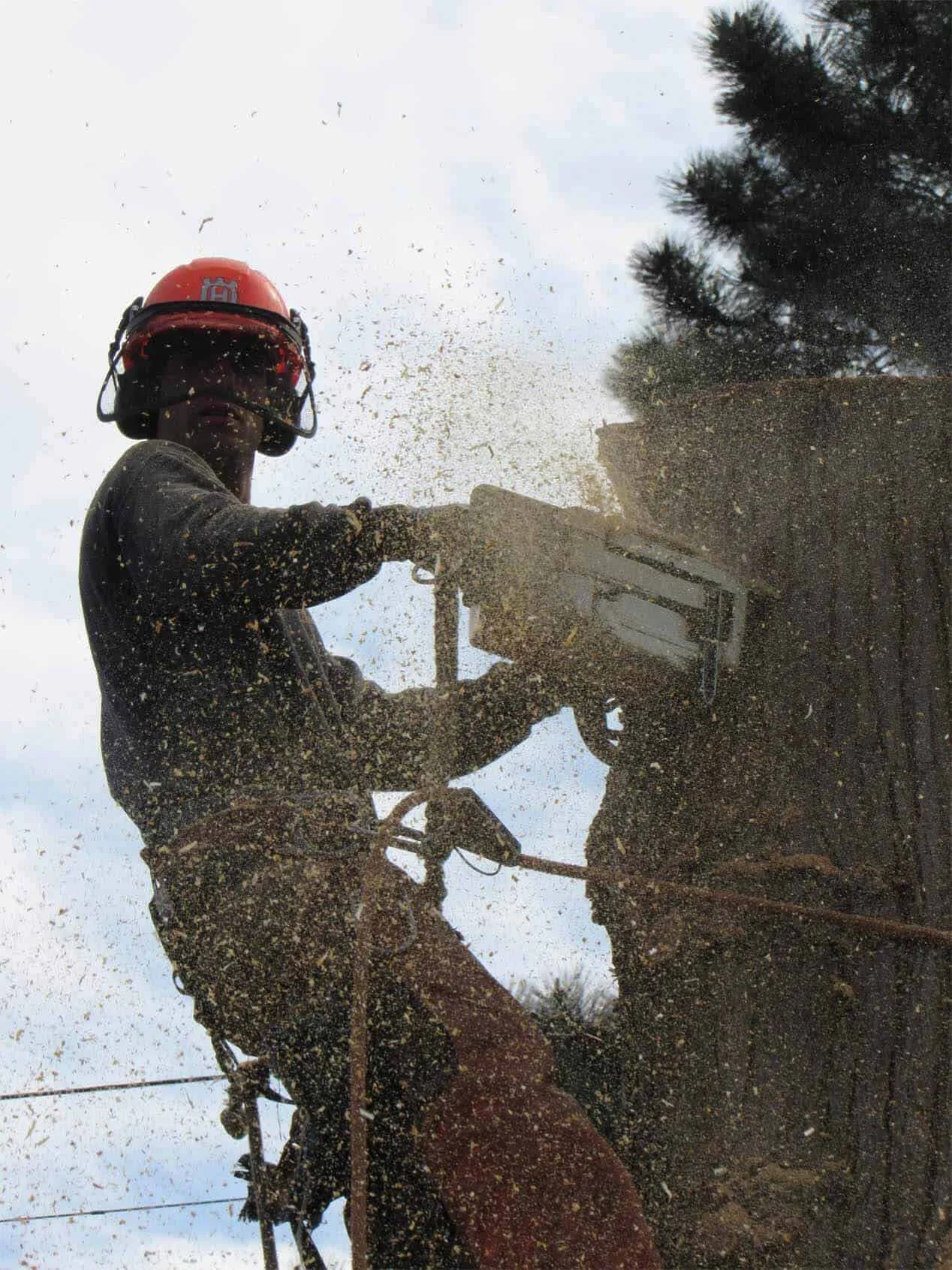

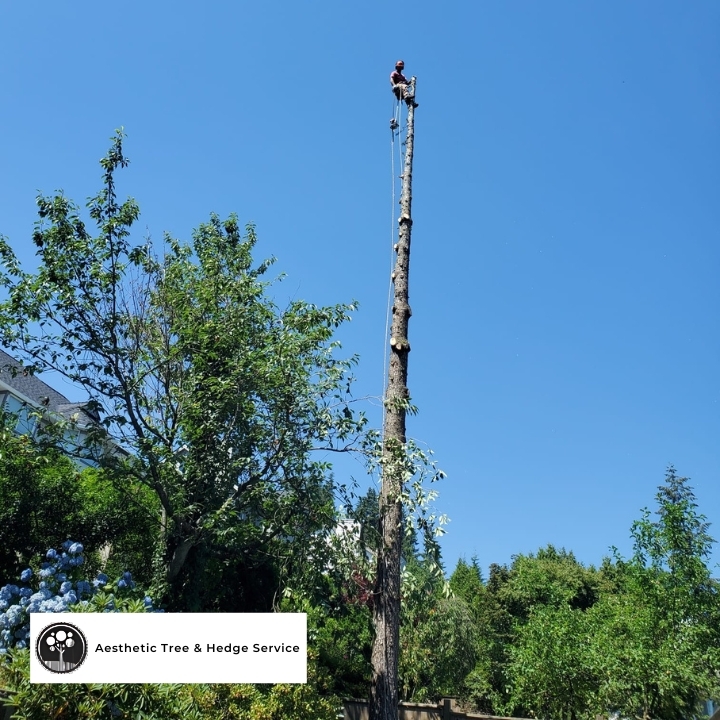
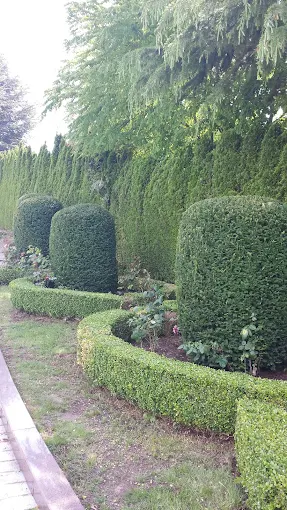
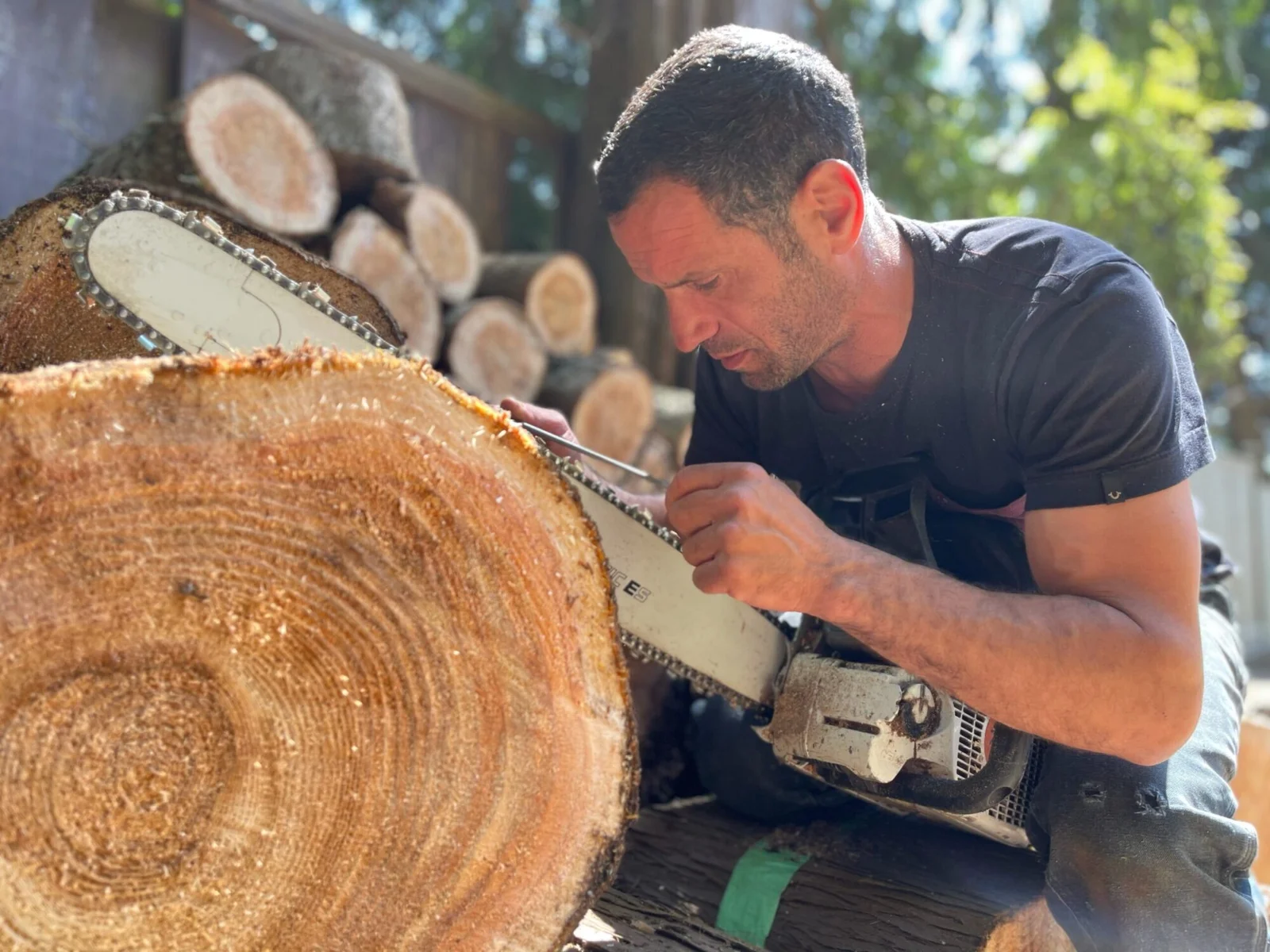
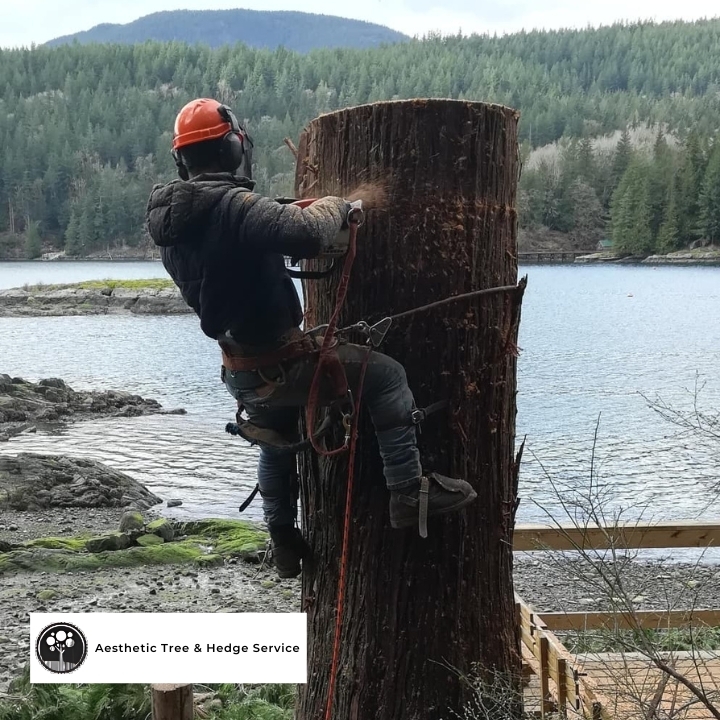
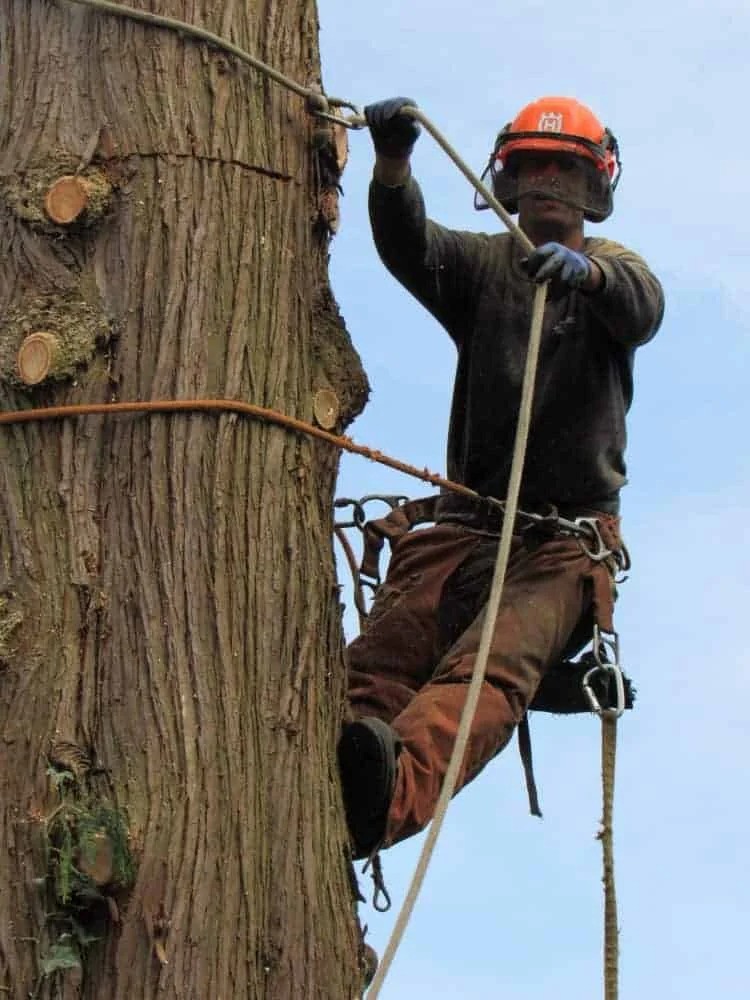
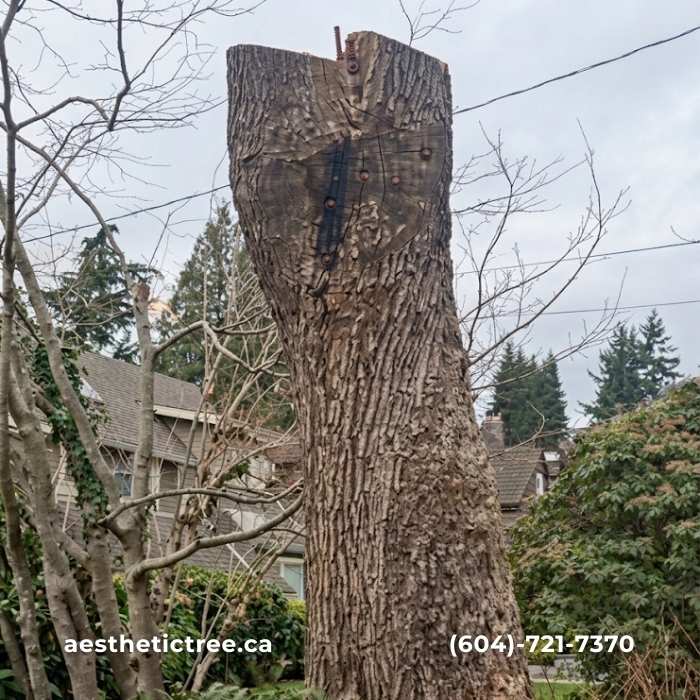
Serving All of Greater Vancouver
Need Vancouver Tree Cutting & Pruning in Vancouver?
Get a free, no-obligation estimate from our ISA-certified arborists. We serve all of Greater Vancouver with professional, insured tree care.