
TL;DR — Quick Summary
how often should trees be inspected? Learn when to book an arborist inspection in Vancouver and what warning signs need fast action.
how often should trees be inspected? Most Vancouver and Lower Mainland homeowners should inspect their trees once a year, then book an ISA-certified arborist after major wind, heavy rain, construction, soil disturbance, or visible damage.
That is the short answer.
The better answer is this: trees live on their own timelines. A young cherry beside a driveway needs a different schedule than a mature Douglas fir over a roof. A cedar hedge in Richmond faces different stress than a Big-leaf maple on a steep North Vancouver lot.
So this guide gives you a clear inspection rhythm. It also explains what you can check yourself, when to call an arborist, and when a tree becomes urgent.
Aesthetic Tree & Hedge Services works across Vancouver, Burnaby, North Vancouver, Richmond, Coquitlam, and the Lower Mainland. Our team is ISA-certified and WCB registered. We look at trees through a safety-first lens, with bylaw requirements and ANSI A300 standards in mind.
TL;DR
- Inspect most trees once a year, ideally in late winter or early spring.
- Inspect again after major wind, heavy rain, snow, construction, trenching, or root damage.
- Call an ISA-certified arborist right away if you see cracks, leaning, fungal conks, dead tops, hanging limbs, or soil lifting near the root flare.
- Mature trees near homes, driveways, power lines, schools, sidewalks, or neighbour properties need closer attention.
- In Vancouver, a permit is required to remove many private trees 20 cm or larger in diameter, measured 1.4 m above ground, under the City of Vancouver Protection of Trees By-law No. 9958.
How Often Should Trees Be Inspected by a Homeowner?
Homeowners should do a simple visual check every season. Then book a professional tree inspection once a year for mature, valuable, or high-risk trees.
Think of your own check as the smoke alarm test. It is not a full electrical inspection. But it catches obvious problems early.
Walk your property four times a year. Once in each season is enough for most homes. Look from the ground only. Do not climb the tree. Do not use a ladder. Do not cut a loaded branch. Tree tension is hard to read from below.
Your seasonal check should include:
- The root flare, where the trunk widens at soil level
- The trunk, especially cracks, cavities, and peeling bark
- Major branch unions, especially tight V-shaped forks
- The crown, including dead tops and thinning leaves
- The soil, including fresh heaving or lifting
- Nearby targets, such as roofs, cars, fences, decks, and walkways
That last point matters. Tree risk is not only about the tree. It is also about what the tree can hit.
A dead branch over a garden bed is one concern. The same branch over a play area is another.
For most Lower Mainland homes, the best annual inspection window is late winter to early spring. The canopy is open. Branch structure is easier to see. Storm damage from fall and winter has already shown itself. You also have time to plan pruning before peak growing season.
That said, do not wait for spring if the tree looks unsafe now. If you see a hanging limb over a driveway, call for help.
If the tree is already damaged, leaning, split, or near a structure, a standard visit may turn into a hazard assessment. If documentation is needed for a permit, development file, or neighbour concern, ask about an arborist report in Vancouver.
When Should Trees Be Inspected by an ISA-Certified Arborist?
Book an ISA-certified arborist inspection once a year for any large tree near a target. A target is anything people use or value. That includes a house, garage, road, patio, parking spot, fence, service line, or public walkway.
You should also book an arborist inspection when something changes.
Trees are stable until conditions change. Then old defects can become new risks.
Call an arborist after:
- A windstorm
- Heavy rain or saturated soil
- Snow or ice loading
- Nearby excavation
- Sewer or drainage work
- New construction
- Grade changes
- Root cutting
- Major pruning by someone else
- A vehicle strike
- Sudden leaf loss
- Fungal growth on the trunk or root zone
In our work across Vancouver and the Lower Mainland, we pay close attention to site history. A tree does not fail only because of what happened today. It fails because past stress added up.
A cedar with roots cut for a new retaining wall can look fine for a while. A Big-leaf maple with old topping cuts can push out leafy growth, yet still hold weak attachment points. A Douglas fir can stay green while root decay advances underground.
This is why trained eyes matter.
The International Society of Arboriculture runs the ISA Tree Risk Assessment Qualification, known as TRAQ. ISA describes the program as training arboriculture professionals in the fundamentals of tree risk assessment. That matters because risk assessment is not guesswork. It follows a process.
ANSI A300 standards also matter. The Tree Care Industry Association states that ANSI A300 tree care standards give standard practices and specification writing guidelines for arborists, urban foresters, landscape architects, and contractors. ANSI A300 Part 9 covers tree risk assessment, including assessment levels, analysis, and reporting.
A good inspection should explain what was observed, what level of assessment was performed, and what action is recommended. It should not scare you into removal when pruning, cabling, mulching, or monitoring will do the job.
When pruning is the right choice, the work should match tree biology. For planned structural work, see our tree cutting services in Vancouver. Proper cuts protect the branch collar. They reduce end weight. They do not leave stubs or strip the tree.
What Tree Warning Signs Mean You Need an Inspection Now?
Some tree problems can wait a few weeks. Some cannot.
Call an ISA-certified arborist soon if you see any of these signs:
- A new lean, especially after wind or rain
- Soil lifting on one side of the root zone
- Cracks running down the trunk
- A split between two main stems
- Dead branches larger than your wrist
- A dead top in a conifer
- Mushrooms or fungal conks on the trunk
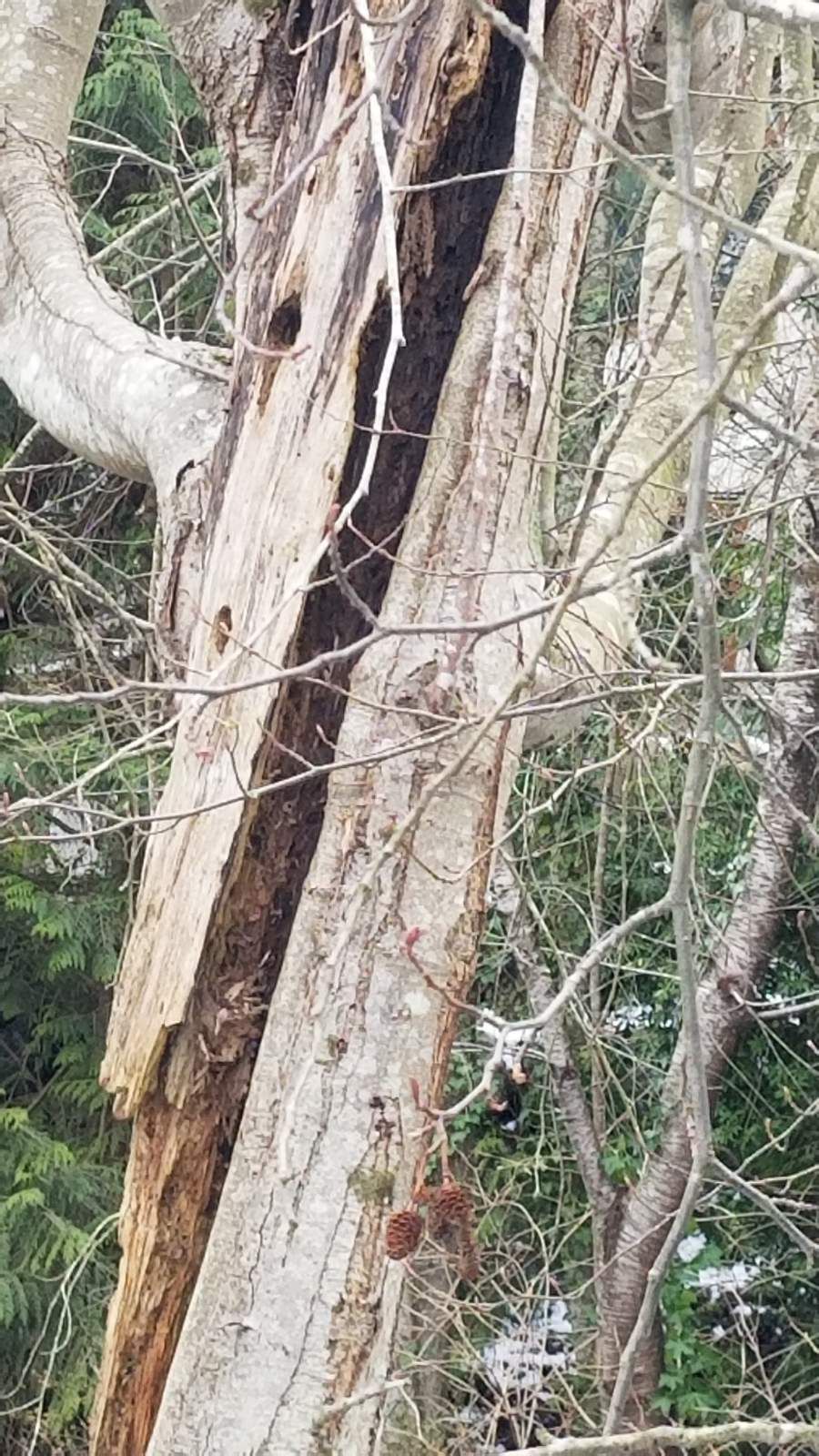
- Cavities with soft or crumbly wood
- Bark falling off in large sheets
- Sawdust or insect activity near the base
- Broken branches hanging in the canopy
- Branches touching the roof or utility lines
- Roots cut during trenching or landscaping
A new lean is different from an old lean. Many trees grow with a lean and stay stable for decades. A sudden lean is a warning sign. Look at the soil around the root flare. If the soil is cracked, raised, or pulling away, treat it as urgent.
Fungal conks deserve respect. They are not just surface growth. They often indicate decay in wood or roots. The species matters. The location matters too. A conk near the root flare raises more concern than a small mushroom in nearby mulch.
Dead tops in cedars and firs are common around the Lower Mainland. They are still worth checking. A dead top can break. It can also signal drought stress, root issues, or disease.
Broken hanging limbs are high-risk because they are already detached or partly detached. Wind, rain, or a light touch can bring them down.
If the tree has already failed, or a limb is hanging over a roof, driveway, sidewalk, or line, call for emergency tree service. Do not stand under the canopy to take photos. Do not park under it. Keep people back.
How Do Vancouver Weather and Soil Affect Tree Inspection Timing?
Vancouver trees need inspection schedules that match our weather.
The Lower Mainland is not a dry, calm place. We get long wet periods, strong coastal wind, saturated soils, and summer drought stress. That combination is hard on urban trees.
The City of Vancouver says its urban forest includes about 150,000 street trees, 36,000 specimen trees in golf courses and urban parks, and more than 1 million trees across 444 hectares of public forests and woodlands. That is a large urban forest in a tight city.
The same City of Vancouver 2025 Urban Forest Strategy says Vancouver is planning for hotter, drier summers, more frequent and intense rainfall events, and sea level rise. The city has also set a canopy target of 30% by 2050.
That context matters for homeowners. Tree care is not only about one tree. It is about keeping the right trees standing safely.
Metro Vancouver's 2026 Urban Forest Climate Adaptation Framework notes that the region gets much of its precipitation between October and January. It also notes that heavy precipitation events often arrive with coastal windstorms.
That is the inspection clue.
Check trees after the first major fall storm. Then check again after winter. Wet soil lowers root grip. Wind pushes the canopy. If roots are already restricted by pavement, retaining walls, driveways, or compacted soil, the risk rises.
Summer is another stress point. Drought stress often shows up as browning cedar tips, thin canopies, early leaf drop, or dead branches. Those signs do not always mean the tree is dying. But they do mean the tree needs attention.
For young or newly planted trees, summer checks are about water, mulch, staking, and root flare exposure. For older trees, summer checks are about canopy density, deadwood, pests, and cracks hidden by leaves.
A simple rhythm works well here:
- Late winter or early spring: professional inspection for mature or high-risk trees
- Late spring: homeowner check after new leaves emerge
- Late summer: drought stress check
- After major storms: safety check from the ground
If your tree has poor soil, exposed roots, or lawn damage from mowing, support the root zone. Mulch helps when it is done right. Keep mulch off the trunk. Keep the root flare visible. For soil and root-zone support, see our mulching services.
How Often Should Trees Near Homes, Driveways, and Power Lines Be Inspected?
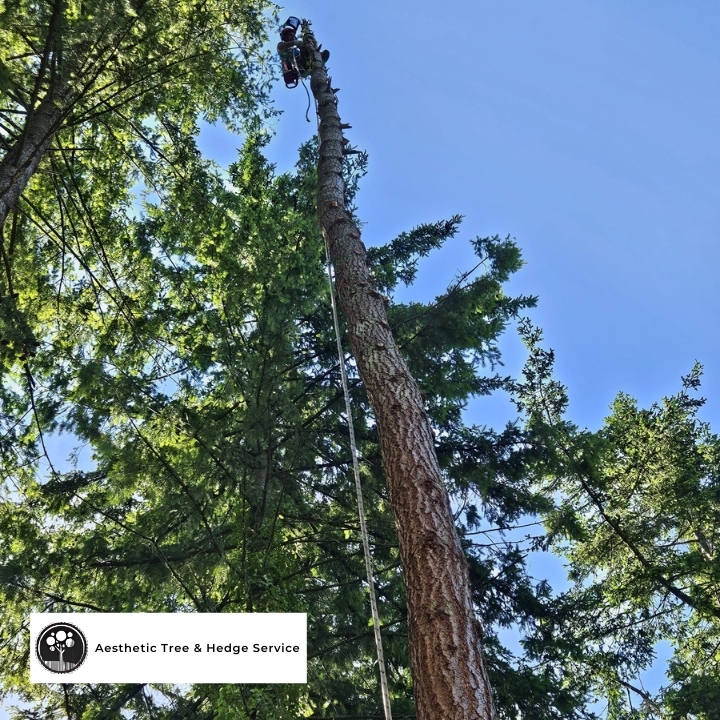
Trees near homes, driveways, and power lines should be checked more often than trees in open areas.
A low-risk tree in the back corner of a large yard may only need an annual professional look. A large cedar beside a house may need closer monitoring. A maple over a driveway deserves attention because people, cars, and structures sit below it every day.
Use target occupancy as your guide. In plain English: how often is someone or something under the tree?
High-use areas include:
- Front entries
- Driveways
- Sidewalks
- School routes
- Patios
- Decks
- Parking pads
- Play areas
- Neighbouring roofs
- Shared fences
- Commercial entrances
A tree over a busy entrance has less room for delay. Even a moderate defect matters more when people pass below it all day.
Power lines add another layer. Do not prune trees near energized lines yourself. Electricity can arc. You do not need direct contact for danger. If branches are near lines, keep clear and call the right professional.
WorkSafeBC rules reflect that risk. Its Occupational Health and Safety Regulation Part 26 covers forestry operations and includes tree pruning, repairing, maintaining, bucking, taking down trees in pieces, and tree-climbing work. It also requires added precautions when weather creates a hazard.
WorkSafeBC also reported that in 2020, the manual tree falling injury rate was 20.1, nearly ten times the provincial average of 2.15. That statistic was for manual tree falling, not routine yard care. Still, it shows why tree work is not casual labour.
WorkSafeBC's 2023 facts and figures also reported 4.15 million missed workdays in B.C. due to work-related injury and disease, plus 175 accepted work-related death claims. Tree work sits inside that wider safety reality.
This is why WCB registration matters. It is not a logo for a website. It is part of responsible work around homes, workers, neighbours, and public spaces.
If an inspection shows that a tree cannot be retained safely, removal may be the right recommendation. For that situation, read about tree removal in Vancouver. Removal should come after assessment, not panic.
What Happens During a Professional Tree Inspection?
A professional tree inspection starts with listening. What changed? What did you notice? When did it happen? Has there been digging, pruning, flooding, construction, or a neighbour dispute?
Then the arborist reads the tree from the ground up.
At the root zone, we look for:
- Root flare visibility
- Soil cracking or heaving
- Fungal growth
- Girdling roots
- Compaction
- Fill soil against the trunk
- Excavation damage
- Poor drainage
At the trunk, we look for:
- Cracks
- Cavities
- Decay columns
- Old topping wounds
- Included bark
- Sap flow
- Insect activity
- Mechanical damage
In the canopy, we look for:
- Deadwood
- Broken limbs
- Weak branch unions
- Overextended limbs
- Sparse foliage
- Dead tops
- Poor past pruning
- Species-specific defects
Species matters.
Douglas fir often raises questions about height, wind exposure, and root stability. Western red cedar often shows drought stress, dead tops, or hedge decline. Big-leaf maple often needs attention at heavy limbs and old wounds. Birch can decline fast under heat and drought. Cherry and plum can have weak attachments and decay at old cuts.
A good inspection also checks the site. Trees do not grow in a lab. They grow beside driveways, fences, drains, patios, lawns, slopes, and houses.
We also consider municipal rules. Vancouver, Burnaby, North Vancouver, Richmond, Coquitlam, and other Lower Mainland cities each have their own tree bylaws. The rules can change by tree size, species, zoning, development status, and property type.
The City of Vancouver Protection of Trees By-law No. 9958 says a permit is required to remove any private-property tree with a diameter of 20 cm or greater, measured 1.4 m above the ground. The City of North Vancouver Tree Bylaw No. 8888 also uses a 20 cm diameter threshold for many protected trees, measured at 1.4 m above ground.
Do not guess on permits. A healthy-looking tree can still be protected. A hazardous tree can still require documentation.
If your inspection is tied to construction, subdivision, insurance, or a permit file, ask for written findings. A formal report is often the cleanest path.
Can Regular Tree Inspections Prevent Tree Removal?
Yes. Regular inspections often prevent removals.
That does not mean every tree can be saved. Dead, unstable, or badly decayed trees sometimes need removal. But many trees are lost because small issues were ignored for years.
Early inspections can catch:
- Weak branch structure while pruning can still correct it
- Mulch piled against bark before decay starts
- Girdling roots before they restrict the trunk
- Soil compaction before decline becomes severe
- Small deadwood before it becomes large deadwood
- Hedge stress before full sections brown out
- Root damage before construction moves forward
This is where arboriculture differs from basic landscaping. The goal is not just to make the tree look tidy today. The goal is to protect structure, health, clearance, and safety over time.
For example, a young maple with co-dominant stems can often be trained. Wait ten years, and that same union may become a split risk over a roof.
A cedar hedge with early thinning can often recover with better pruning, watering, and soil care. Wait until the inside is bare and brown, and your options shrink.
A mature fir with dead lower limbs may only need selective deadwood removal. But if there is root decay, soil lifting, and a target below, the conversation changes.
When tree health and safety can be improved, pruning should follow a clear objective. Crown cleaning, clearance pruning, reduction, and structural pruning are not the same thing. Topping is not proper tree care.
For homeowners comparing options, our seasonal tree care guide explains how timing affects pruning, watering, and general maintenance in Vancouver.
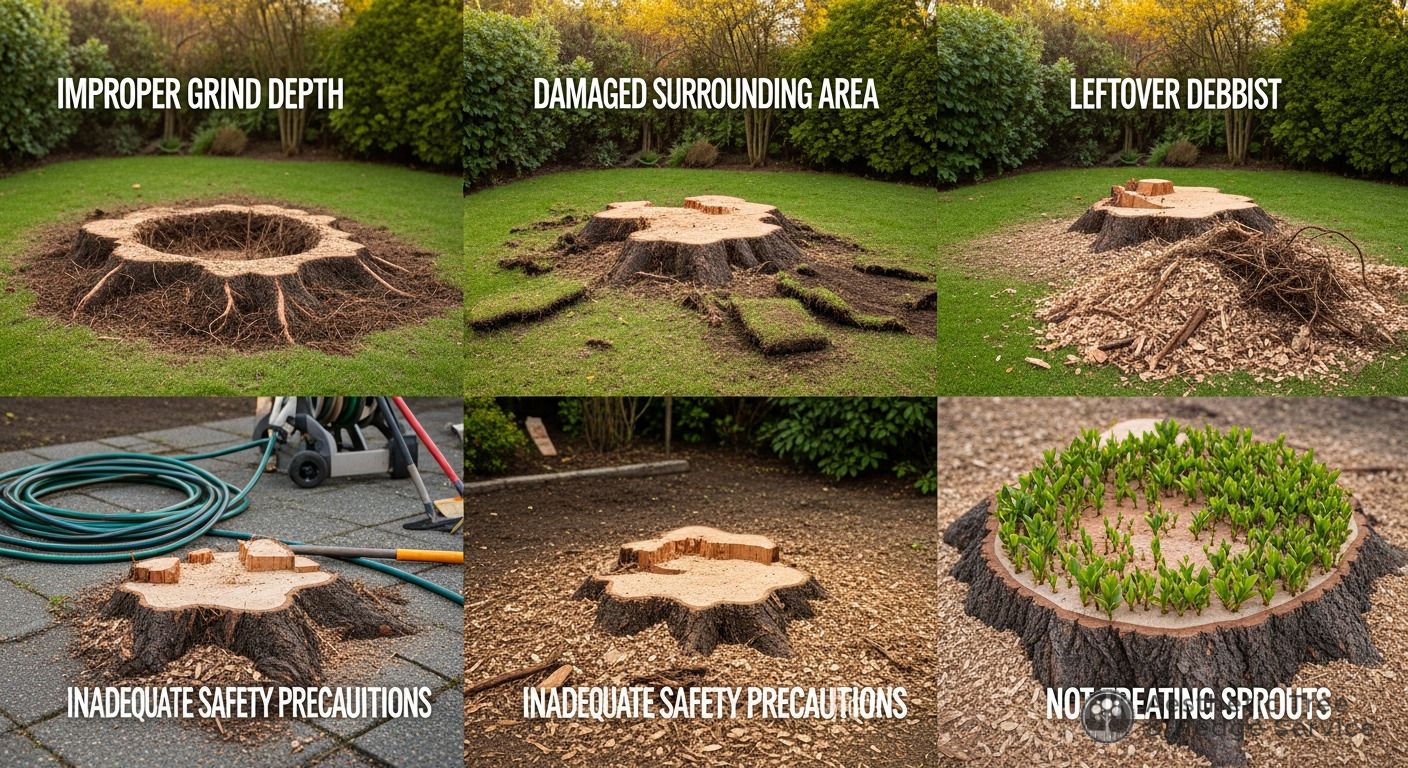
If a tree is removed, the work does not end at the stump. Stumps can interfere with replanting, lawn repair, drainage work, and pest control. If removal is already planned, ask whether stump grinding in Vancouver should be done at the same time.
How Often Should Hedges Be Inspected and Trimmed?
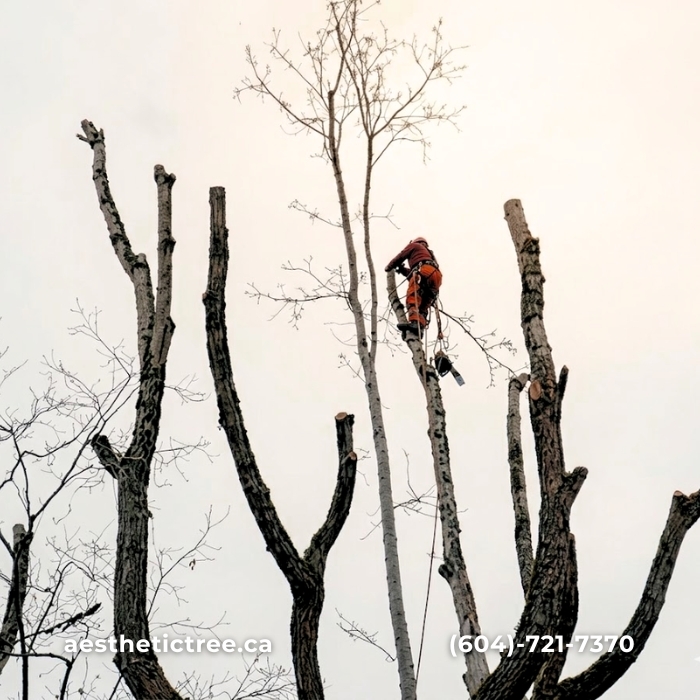
Hedges should be inspected at least twice a year. Most Vancouver hedges also need trimming one to three times a year, depending on species, growth rate, and the look you want.
Cedar hedges are common across Vancouver, Burnaby, Richmond, and Coquitlam. They are also easy to damage with poor timing or heavy cuts.
A hedge is still a row of trees. It has roots, trunks, leaders, and live foliage limits. Cut past the green growth on many cedars, and bare patches may not fill in.
Inspect hedges in spring and late summer. Look for:
- Brown interior sections
- Dead tops
- Gaps near the base
- Spider mites
- Root-zone dryness
- Soil compaction
- Leaning stems
- Snow or ice damage
- Overgrowth into sidewalks or driveways
Hedges beside sidewalks and lanes need extra attention. Clearance matters for people walking, drivers backing out, and neighbours sharing fence lines.
Good hedge care is steady. It is much better to trim lightly and regularly than to cut hard after years of neglect.
For formal hedges, the sides should usually taper slightly, with the base wider than the top. That lets light reach lower foliage. If the top is wider, it shades the base. Then the lower hedge thins out.
For cedar hedges, deep summer drought can show up months later. A hedge that browned in September may have been stressed in July. That delayed response is common.
If your hedge is tall, uneven, or growing into a structure, book professional hedge trimming services in Vancouver. A clean trim is not only about appearance. It is about plant health, safe access, and predictable regrowth.
Do You Need a Tree Inspection Before Construction, Renovation, or Landscaping?
Yes. You should inspect trees before construction, renovation, trenching, drainage work, retaining walls, driveway work, or major landscaping.
Do this before plans are final. Not after the excavator arrives.
Roots spread farther than many homeowners expect. Most fine absorbing roots sit in the upper soil layers. They can extend well past the dripline. Cutting them can reduce stability and water uptake.
Construction can harm trees through:
- Root cutting
- Soil compaction
- Grade changes
- Trunk wounds
- Fill soil over roots
- Drainage changes
- Heat from reflected surfaces
- Storage of materials under the canopy
- Equipment traffic in the root zone
The damage may not show right away. A tree can leaf out after root injury, then decline over the next few seasons. That delay causes confusion. The tree looks fine until it does not.
Municipal bylaws also matter during construction. The City of Vancouver states that development applications involving trees 20 cm or larger may require an arborist report. Retained trees, adjacent trees, and boulevard trees may need protection.
Tree protection is not just orange fencing. It needs the right distance, placement, and follow-through. A fence that gets moved for convenience is not protection.
Before construction, an arborist can identify:
- Which trees are protected
- Which trees can be retained
- Which trees are already poor candidates
- Where protection fencing should go
- How work can avoid critical roots
- Whether pruning is needed for clearance
- Whether a permit or report is required
For tight sites, root barriers may be part of the plan. They are not magic. They must be used carefully, with the tree species and site goal in mind. If roots are part of the concern, see our root barrier service.
If construction requires removal, do not start with a saw. Start with the bylaw. Then get the right documentation.
How Do Tree Inspections Help With Vancouver Tree Permits and Bylaws?
Tree inspections help you understand what is allowed before you remove, heavily prune, or damage a protected tree.
This is important in the Lower Mainland because bylaws are local. Vancouver rules are not the same as Richmond rules. Burnaby and Coquitlam have their own processes. North Vancouver has city and district rules. A property near a stream, slope, or development site can have extra requirements.
In Vancouver, the Protection of Trees By-law No. 9958 applies to trees on private property. The city states that you need a permit to remove any private tree with a diameter of 20 cm or greater, measured 1.4 m above ground. It also notes that a 20 cm diameter is about 64 cm in circumference.
The city lists permit conditions that can include a tree certified by an arborist as dead, dying, or hazardous. It also includes cases where a tree directly interferes with utility wires and cannot be pruned while keeping reasonable health or appearance.
That wording matters.
A homeowner saying a tree feels unsafe is not the same as an arborist documenting observed risk. A neighbour saying roots are annoying is not the same as a qualified report for sewer or drainage conflict.
In North Vancouver, the City says a permit is required to remove many protected trees 20 cm or greater, measured at 1.4 m above ground. It also warns that tree work must follow federal and provincial bird protection laws.
Bird nesting is a real timing issue. Do not assume a tree can be removed next week during nesting season. An arborist can help plan timing and check the site.
Inspections also protect homeowners from accidental bylaw damage. Heavy pruning can count as tree damage in some cases. Root cutting can also create risk. If you are planning major work near a protected tree, ask before you cut.
A proper inspection gives you a record. That record can support a permit application, contractor plan, insurance discussion, or neighbour conversation.
What Can You Inspect Yourself Between Arborist Visits?
You can inspect a lot from the ground. Keep it simple. Make it repeatable.
Start at the base. The root flare should be visible. If the tree looks like a telephone pole going straight into soil or mulch, the flare may be buried. That can trap moisture against bark and hide decay.
Look at the soil. Fresh cracks, lifting, or a mound on one side can signal root movement. That is urgent after wind or rain.
Move up the trunk. Look for cracks, cavities, loose bark, fungal growth, and wounds. Take photos from the same angle each season. Photos help you see change.
Look at branch unions. Tight V-shaped unions can trap bark between stems. That included bark can weaken the attachment. Wide U-shaped unions are often stronger.
Look into the canopy. Dead branches, broken limbs, sparse leaves, and dead tops all matter. For conifers, compare colour and density to nearby trees of the same species.
Then step back. View the whole tree from several angles. Has it leaned more? Is the crown balanced? Are branches over a roof, chimney, lane, or wire?
Use this simple homeowner checklist:
- Did anything change since last season?
- Did a storm break branches?
- Is the tree leaning more than before?
- Is the root flare visible?
- Are mushrooms growing on the trunk or roots?
- Are large dead branches present?
- Are branches rubbing the roof?
- Are roots being cut, paved over, or buried?
- Is the tree near a high-use area?
- Would you feel comfortable parking under it in a storm?
That last question is not scientific. But it is useful. If your answer is no, call an arborist.
Do not diagnose from one symptom alone. Yellow leaves can mean drought, pests, soil issues, root damage, or normal seasonal change. A professional inspection connects symptoms to site conditions.
When Is Tree Removal the Right Recommendation After an Inspection?
Tree removal is the right recommendation when the risk is unacceptable and reasonable mitigation will not reduce it enough.
That is a serious call. It should be based on the tree, the site, the target, and the available options.
Removal may be recommended when:
- The tree is dead
- The tree is dying and near a target
- Major roots have failed
- The trunk has severe decay
- A split stem cannot be corrected
- The tree has shifted after a storm
- Large limbs are failing repeatedly
- Construction has made retention unsafe
- The species, defect, and target create high risk
Sometimes pruning can reduce risk. Sometimes cabling can support a weak union. Sometimes soil care helps. Sometimes monitoring is enough.
But a tree that can strike a house, walkway, or neighbour property needs honest advice. Sentiment does not hold wood together.
If removal is needed, the next questions are practical. Is a permit required? Is crane access needed? Are there nearby lines? Is there room to rig sections down? What happens to the stump? Is replanting required?
For large or complex removals, equipment choice matters. Tight urban properties often need careful rigging or crane support. See our crane tree removal service for situations where controlled lifting is safer than dropping sections.
After removal, replanting may be required by bylaw or simply be the right long-term choice. A new tree should fit the site. That means mature size, soil volume, overhead clearance, root space, and climate stress all matter. If you are replacing a removed tree, ask about tree planting with species selection for Lower Mainland conditions.
FAQ
How often should trees be inspected in Vancouver?
Most trees should be inspected by the homeowner each season and by an ISA-certified arborist once a year. Inspect sooner after storms, construction, root damage, heavy rain, snow, or visible defects. Large trees near homes, driveways, sidewalks, and power lines need the closest attention.
What is the best season for a tree inspection?
Late winter or early spring is the best time for many inspections. Branch structure is easier to see before leaves fill the canopy. It also gives you time to plan pruning before peak growth. Storm-damaged trees should be inspected right away, no matter the season.
Do I need an arborist report to remove a tree in Vancouver?
You may need one. The City of Vancouver says a permit is required to remove private-property trees 20 cm or larger in diameter, measured 1.4 m above ground. If the tree is hazardous, dead, dying, or part of a development file, an arborist report can support the application.
Can I inspect a tree myself?
Yes, but only from the ground. You can check for leaning, cracks, dead branches, fungal growth, soil lifting, and root-zone damage. Do not climb, cut hanging limbs, or work near power lines. Call an ISA-certified arborist when you see warning signs.
What should I do after a storm damages my tree?
Keep people and vehicles away from the tree. Look from a safe distance. Watch for hanging branches, split trunks, fresh lean, and lifted soil. If a branch is on a roof, driveway, sidewalk, or line, call for emergency help. Do not cut loaded limbs yourself.
Trees do not need constant worry. They need steady attention. A yearly inspection gives you that. It catches small problems before they become expensive, unsafe, or bylaw-heavy.
If you are unsure about a tree on your Vancouver or Lower Mainland property, call Aesthetic Tree & Hedge Services for a free estimate at (604) 721-7370. Our ISA-certified arborists are WCB registered, safety-first, and ready to help you make the right call.
Before You Go
Where are you in your tree care journey?
Our Tree Care Services
ISA-certified arborists serving Greater Vancouver
Explore Our Tree Care Services
From expert pruning to safe tree removal, our ISA-certified arborists are ready to help across Greater Vancouver.
View Services